
If you’re here, you’re probably thinking one of two things:
You want to start freelance writing…Or you’ve already started, and nothing is clicking yet.
I’ve been there.

When I started freelance writing, I started out on content mills and that sucked big time. You don’t want to start there!
All I wanted was to make money writing online.
And over time, I figured out what actually matters… and what just wastes your time.
Lucky for you I was your crash test dummy so you don’t have to make those same mistakes I did.
So this guide is going to walk you through freelance writing for beginners in 2026 in a way that actually works today.
And I’m sure you’re worried about AI and how that is impacting freelance writing.
I’ll be honest and say yes, it is impacting freelance writing but there’s a way for you – the newbie freelance writer – to still thrive and make a living as a writer.
We’re going to talk about the real setup, the small details most people skip, and how to build something that actually leads to paid clients.
What Is Freelance Writing (And What It Looks Like in 2026)?
The freelance writing definition is simple:
You get paid to write content for businesses.
You provide the deliverable and they pay you for that service.
But if you want to freelance write in 2026, they way you create content has changed.
They want writers who can:
- Understand their audience – are they business owners or content creators? Are they customers or leads?
- Turn ideas into clear messaging – how to talk in a conversational way about SaaS tools or about a product no one knows about yet
- Help content perform (traffic, leads, conversions) – how to add keywords to your content and make it sound natural and how to write to attract social media clicks
- Offer insights as an expert of pull quotes from subject matter experts
This is where most beginner freelance writers get stuck.
They focus on writing more… instead of learning how to write for a purpose.
And changing your perspective is important for 2026 because you’re competing with AI which can whip out a bland and uninspiring blog post for these businesses.
And those business owners might LOVE this AI content and not realize that it won’t connect to their user base until it’s too late.
They’ll wait until they have a dead blog with no leads and then they start realizing they need us – the freelance content writer – to help them gain leads and traffic.
To help you see what type of content clients pay big bucks for check out these blog posts I wrote for my clients:
- Email Marketing: How We Get 10,000 Leads a Month
- Event Marketing Email Examples; Crafting Engaging Campaigns
- Teachable: Ultimate Review, Walk-Through, Pros & Cons
Types of Freelance Writers (And What You Can Offer)
Before you even think about pitching, you gotta know what type of freelance writer you want to be.
You don’t have to pick one type or title forever, but you do need to know what’s out there.
Also, it’s not really suggested to pick two or three titles either. What you can do is pick one and over time learn another skill. This is what I did.
I started out as a blog writer and later incorporated more copywriting skills to my writing.
Over time I titled my “blog writing” skills to being a SaaS content writer. So play around with your freelance writer title to get more leads for your service.
Here are the most common types of freelance writing services in 2026. Look over the list and pick one type of writer you want to be.
Blog Writer –You write SEO blog posts for brands. This is one of the easiest entry points for beginners because blog writing is a versatile skill.
Copywriter – You write landing pages, sales pages, email funnels, and ads. Clients focus more on coversions than traffic.
Content Writer (B2B / SaaS) –You write long-form content, guides, case studies, and thought leadership for companies.
Ghostwriter – You write for someone else (often founders or creators), especially on platforms like LinkedIn. You aren’t cited as the author when you ghostwrite.
Email Writer – You write newsletters, welcome sequences, and promotional emails. Typically copywriters are hired for this type of service.
Technical Writer – You write documentation, product guides, and tutorials.
You don’t need to master all of these to be a freelance writer in 2026.
You just need to understand them so you can start building skills that overlap like I did with blog writing and copywriting.
My suggestion is to pick one service and learn it inside and out via reading blog posts, watching YouTube videos and reading books on it.
From there you can practice this service and over time add another skill to help you make more money writing.
The Foundations Most Beginner Freelance Writers Don’t Think About (But You Shouldn’t)
Before you pick your niche and before you start pitching, you need to take care of the basics.
In my Writeto1k program I make sure to go over this in detail for those who are absolutely new to starting an online business.
Because this is what makes you look like a professional instead of someone “trying freelance writing.”
Get a Professional Email Address
Something I always tell new freelance writers is:
Don’t use a random personal email address for your new business.
Not Gmail. Not Yahoo. Not an old Hotmail account you made years ago.
Instead, get a real domain-based email address connected to your website.
Something like:
Immediately, it changes how you look. And yes, clients absolutely notice this.
Because when someone sees a professional email tied to a real website, it signals that you’re serious about what you do and you’ve actually taken the time to build a business foundation.
It also creates consistency.
Your website, your portfolio, your contact page, and your email all connect together under one brand. That makes you easier to remember and honestly makes you look far more established, even if you’re brand new.
And especially in 2026, where businesses are flooded with cold emails, AI-generated pitches, and generic outreach messages every single day.
It also helps separate your freelance business from your personal life. Instead of important client emails getting buried between newsletters, receipts, and random notifications, you have a dedicated space for your writing business.
And honestly, psychologically, it changes things for you too.
The moment you send an email from your own domain, it starts feeling real and you stop thinking of yourself as someone “hoping” to become a freelance writer someday.
You start operating like one already.
Get a Simple Service Based Website
Having a simple website already puts you ahead of beginner writers who still rely on social media profiles or random Google Docs.
Your website acts as your online business card. It houses your portfolio, testimonials and Hire Me page, helping you with trust signals for people who hire you.
And for 2026 and beyond, trust matters more than ever before because clients are constantly getting spammed with AI-generated pitches.
So, when a potential client clicks to your website and see an actual HUMAN on the home page and a natural flow to your website copy, they immediately want to hire you!
That’s it.
You don’t need fancy animations. You don’t need a custom-coded site. You don’t even need a huge logo.
You need a place that clearly explains:
- Who you are
- What you do
- How to contact you
- Samples of your work
My service-based website changed constantly as I grew as a writer but I’m happy with what I currently have.
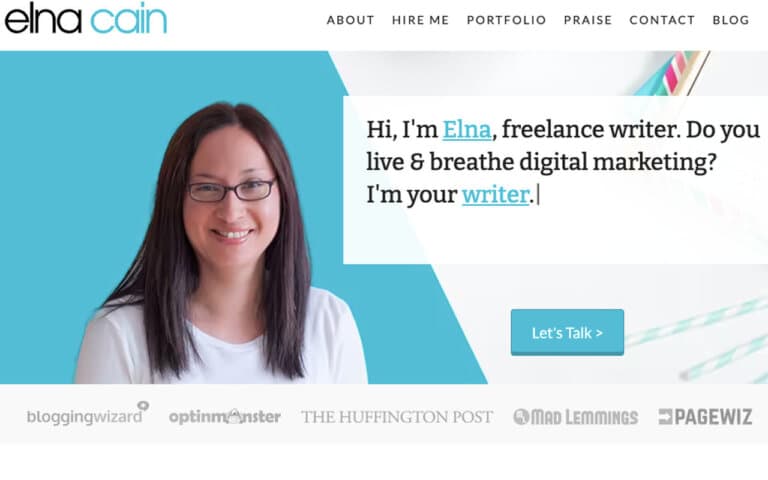
The important thing is have a website that’s published, instead of trying to perfect it with colors, font choices and branding for months.
Create Writing Samples
We talked about the type of writer you want to be and that can dictate the type of samples you’ll end up creating.
If you are interested in writing emails, your writing samples are mock emails. Similarly, if you want to re-write AI content, you need to provide a side by side sample of AI “slop” and you’re edited content.
But, it’s okay if you’re not sure if you want to commit to email writing or editing AI content. The best thing to do is create blog posts as your first writing samples.
A great beginner portfolio could literally start with:
- 2–3 blog posts
That’s enough to begin.
But here’s a critical part most beginners skip:
When creating your samples, treat it like a real legit gig. Work thought it and don’t rush writing the process.
Research the topic, structure them properly, add real examples and edit them carefully.
Because your samples are often your first impression.
And in many cases, they’re the only thing standing between you and getting a reply to your pitch.
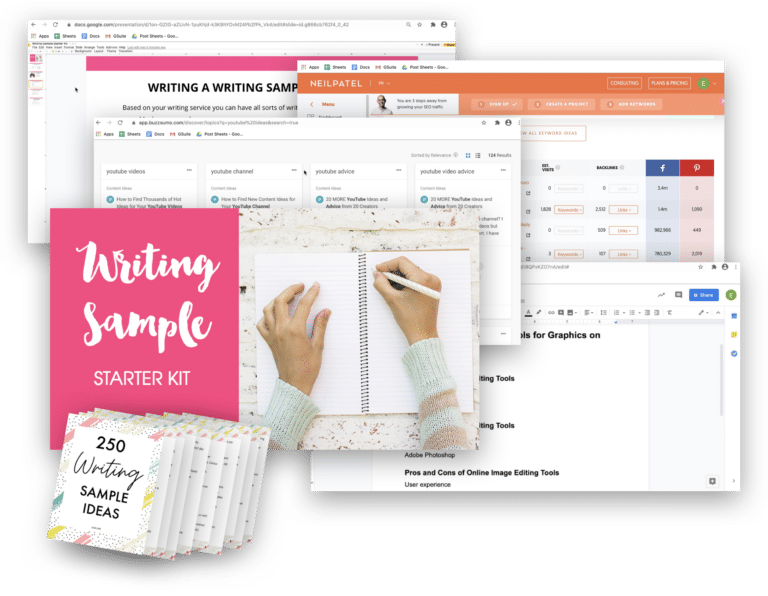
If you need help getting started with your writing sample, make sure to check out my Writing Sample Starter Kit for Beginners.
Learn AI and Use AI Tools
In 2026, freelance writers who refuse to learn AI tools are going to struggle.
That doesn’t mean AI will suddently replace ALL writers, but it does mean those that know how to use AI will move faster and will profide more value to clients.
When AI first came out, I refused to use it. I thought it was just another SEO hack to create low quality content.
But after a year of AI NOT leaving the news, I decided to try it for my passion blogs.
At first, they weren’t that great. I had to be very explicit in my AI prompts and always fact check my work.
But, it’s been several years and AI is more integrated into our everyday lives, and it’s better quality.
And once my clients said it was okay to use AI, I gave in and really dove into AI tools and using them for content planning and creation.
The key to using AI, though, is not as making it a replacement of your thinking.
For example, AI tools can help you:
- Brainstorm blog ideas
- Create outlines
- Research topics faster
- Analyze search intent
- Generate headline variations
- Simplify complicated information
- Speed up editing
And really, writers who learn AI tools AND have strong writing skills are putting themselves in a much stronger position for the future.
Because businesses are actively looking for writers who can manage content workflows, not just type words into a document.
Improve Your Writing (Intentionally)
The last on this list of foundational skills to have when you start freelance writing, is, of course, improving your writing skill.
You need to actively study writing and pay attention to what keeps readers engaged online.
Notice how strong articles transition between ideas.
Look at how headlines are written.
Study email copy.
Analyze landing pages.
This is part of becoming a better writer.
And to tell the truth, one of the fastest ways to improve is editing your own work.
Most first drafts are too long, which means they may be too wordy and repetitive.
Good writing is usually clear, direct, and easy to understand. This sounds easy but it takes time to devleop.
Remember, you want short and long sentences mixed together naturally. You also want your ideas to flow smoothing between sentences. This means it easy for the reader to understand what you mean.
Your Freelance Writing Rate (And What Actually Affects Your Pricing)
This is where most new freelance writers get confused because they see one person charging $100 and then another charging $1,000…for almost the same type of content.
What gives?
Your freelance writer rate depends on four main factors and those factors dictate your rate:
1. Experience (But Not Just Years)
Yes, beginners should charge less for their services.
But the base rate doesn’t have to be content mill type of rates. Instead, set a base price of $.12/word and move up from there.
With this rate, make sure you can write clearly, structure your content well and meet your client’s deadlines.
Those qualities alone can move you out of “lowest tier” pricing.
And easy ways to move out of the beginner rate are:
- Guest posting – learn how to “pitch” your content ideas to a blog or website that accepts guest writers.
- Writing on Medium – Got to Medium or similar writing platform and create a free profile and start writing. You can even contribute to popular publications on Medium to build a following.
- Starting a blog – similar to starting on Medium, having a blog familiarizes yourself with hosting, building pages on your site and writing a blog post in WordPress or other CMS.
By following that list you will be more experience in the world of writing online and that translates to a higher freelance writing rate.
2. Type of Writing
One thing you’ll learn quickly when researching about becoming a freelance writer is that not all writing pays the same.
For example:
- Blog posts = lower to mid-tier
- Case studies = higher
- Sales pages = much higher
Why?
Because some content directly drives revenue and clients pay more for that.
A sales page is worth more than a blog post because a sales page has a higher conversion rate than an educational blog post.
But you can turn a lower or mid-tier piece of content into a much higher tier.
This is what I have done with my blog writing. I titled it differently – SaaS content writing – to make it sound more “high tier.”
I then also added to my blog writing skills to include copywriting.
That helps with converting readers into customers for businesses.
But what if you’re totally brand new and have no idea how to write a blog post or case study or review article?
I would spend some time online reading different blogs and company blogs to see what a white paper looks like or what a sales page looks like.
Take time and learn how to write these types of content and then practice this type of writing on your blog or on Medium.
3. Research + Strategy
This is where the gap really shows up between beginner freelance writers and writers who get paid well.
A generic blog post is one thing. It reads fine, it covers a topic, and it might even be helpful.
But it’s usually written in isolation. There’s no clear reason it exists beyond “we need content.”
This is also they type of writing AI does and there are businesses out there that just don’t care.
They will take that generic AI blog post over paying a writer.
But over time that business will see that that type of content doesn’t perform.
McKinsey & Co looked at the impact of AI in business and cited that the 80% that use AI, 8 in 10 businesses fail to see any significance in their bottom line.
Now compare that to a blog post that’s built with research and strategy behind it.
Before a single word is written, there’s intention.
You’re looking at keyword targeting, not just picking something random, but choosing a term that actually has search demand and aligns with what the business is trying to rank for.
You’re thinking about search intent and making sure the content matches what someone is actually looking for when they type that into Google.
Then there’s competitor research.
You’re not guessing what a good post looks like. You’re studying what’s already ranking and noticing patterns like finding gaps to help you write clearer and more useful writing.
That alone changes the quality of the final piece.
Internal linking is another layer most beginners skip.
Instead of writing one standalone post, you’re connecting it to the rest of the site.
You’re helping distribute authority, keep readers on the page longer, and guide them toward other relevant content. That’s not just writing.
That’s contributing to the overall SEO structure of the site.
And then there are conversion goals.
A strategic post isn’t just there to get traffic. It has a job to do. Maybe it leads to an email signup.
Maybe it introduces a product. Maybe it moves the reader closer to a decision. Every section of the post is written with that in mind.
When you start thinking this way, you’re not just writing words anymore.
You’re helping a business grow and your writing will help them make money and in turn, get you paid top dollar.
That’s why this type of work is priced differently.
See, clients aren’t just paying for those 1,500 words you submitted. They are really paying for the POTENTIAL that article will have for traffic, leads and sales over time.
And once you understand this, it changes how you approach your services so that you can TELL businesses this as a way to justify your rates.
That’s the shift that moves you out of low-paying work and into higher-paying clients.
4. Your Freelance Writing Niche
A freelance writing niche is a topic or industry that you have knowledge in or want to know more about.
For example, beauty is a niche and retail is a niche. These are industries that are billion dollar industries and that can support a content and editorial team.
But not all writing niches are created equal.
When you look at industries like SaaS, finance, health, and legal, you’re not just writing on the topic. You’re stepping into a completely different level of expectation.
The writer needs to know inside and out about thist topic to be an expert in that niche.
Take Shopify for example.
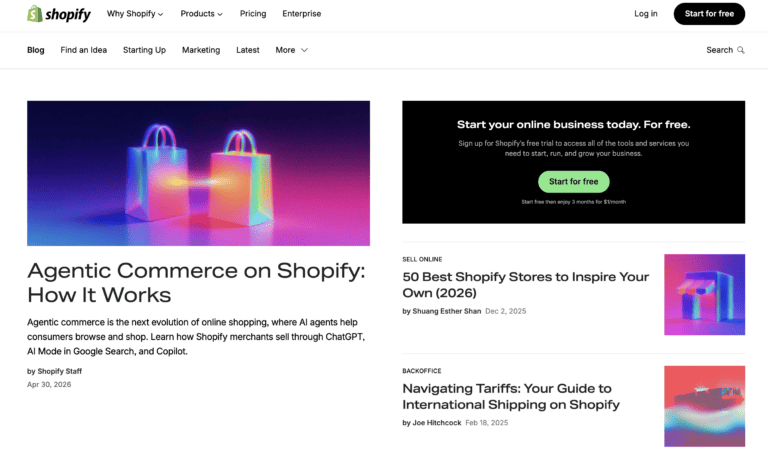
As a freelance writer for any SaaS blog, you’re writing for companies that are selling software at a high price point.
The Shopify blog content isn’t just for traffic. They use the blog as part of their funnel. Each blog posts educates readers about their product and eventually helps to convert them into uers.
That means this type of content needs to be crystal clear, highly structured for easy reading and aligned to their product so it’s at the center of your post. You’re not just explaining a topic. You’re helping position a solution.
Finance is even more sensitive.
You’re dealing with topics that affect people’s money, decisions, and long-term outcomes.
There’s very little room for error.
If something is unclear or inaccurate, it can break trust immediately.
That’s why finance brands are willing to pay more.
To be a finance writer, you need to simplify complex ideas for readers and make sure that everything is up-to-date and accurate.
Health works the same way, but with even higher stakes.
You’re writing content that could influence someone’s well-being.
That means accuracy isn’t optional. It’s expected.
You also have to be careful with tone, claims, and how information is presented.
There’s often an added layer of review, sometimes involving medical professionals, which makes the content more involved and more valuable.
Legal content is even more percise and scruntinized.
You’re working within strict boundaries. Language matters.
Law firms and legal platforms aren’t looking for generic writers. They want someone who can communicate clearly while respecting the complexity of the subject.
And here’s the part most writers overlook.
It’s not just that these niches require more accuracy or expertise.
It’s that the businesses operating in these spaces usually have bigger budgets.
SaaS companies are backed by funding or generating recurring revenue. Finance companies are dealing with high-value customers. Health and legal services often involve significant client lifetime value.
That changes how they invest in content. They’re trying to get content that works.
So when you position yourself in one of these writing niches and start developing the skills to write for them, you’re changing who you’re selling to.
And that’s what allows you to charge more.
Because at that level, you’re no longer seen as someone who “writes blog posts.” You’re a collaborator and someone who can help support their business goals and contribute to their overall content strategy.
That’s a completely different role with a higher rate.
But if you’re wondering what the most popular freelance writing niches are right now, according the a Peak Freelance rate survey, around 27% are in software and SaaS companies, while 14% primarily wrote for agencies (so, no niche) and another 12% focused on eCommerce brands.
Freelance Writing Rates in 2026 (Per Deliverable, Not Hourly)
Now that you understand why the same piece of content can go for $300 or $1,200, let’s go over what you should charge for YOUR writing.
One of the biggest mistakes beginners make is charging hourly or pricing too low just to “get started.”
That approach keeps you stuck.
Because clients don’t actually care how long something takes you.
They care about the result.
That’s why in 2026, most experienced freelance writers price per deliverable or per project, not per hour.
And there’s real data to support this shift.
For example, in the Peak Freelance study, the most common blog post rate is $250–$399 for a 1,500-word article, with higher earners charging $1,000+ per post.
At the same time, broader industry data shows writers charging anywhere from $0.05 to $1.50+ per word depending on experience and niche, which translates into wide per-project pricing ranges.
So instead of thinking per word or per hour, it’s easier (and more accurate) to think in deliverables.
Here’s a General Range (Based on Market Data + Industry Benchmarks)
- Blog posts (1,000–2,000 words): $150–$800+
- AI content editing / humanizing: $50–$300+ per article depending on depth
- Email newsletters: $100–$500+ per email
- Landing pages: $300–$2,000+
- Case studies: $500–$2,500+
- LinkedIn ghostwriting: $500–$3,000/month
These ranges align with multiple sources:
- Canadian freelance pricing data shows USD $150–$600 per blog/article as a typical entry-to-mid range.
- Per-word benchmarks (~$0.05–$0.30+) translate into $50–$600+ per 1,000-word article, depending on quality and expertise.
- Higher-end writers, according to Peak Freelance, routinely exceed these ranges once they specialize or move into strategy-based work.
For me, I started at around $.10/word for blog writing and moved up to $.35/word. I typically write 2,000-3,000-word blog posts for clients.
I also write copywriting email campaigns and funnels and my prices vary for those but start at around $300 per email.
So, while these are benchmarks to go by, it’s really up to you how you see your value as a writer. Some writers heavily value education over experience while others pride themselves in being more of a strategist than a writer.
And still other times, it’s more valuable to be a writer for a particular website because that website will lead to other freelance writing jobs.
If that’s the case, your rate isn’t as important…at least for me it isn’t.
I took many gigs at a lower rate because they were BIG brands that helped me land other freelance writing jobs.
Where to Learn Freelance Writing (And Go Deeper)
If you read all of this and got to this section, then congrats!
It’s a lot for sure but it’s not EVERYTHING you need to know.
I do have this blog for more information and don’t forget my YouTube channel and my program, Writeto1k.
If you have any questions, just add it to your comment and I’ll help you out!


Leave a Reply