
So, every morning I go to LinkedIn to scroll, scroll, scroll….
Why?
Because I’ve been noticing more and more companies are looking for freelance copywriters.
While content writing is still in demand, many brands are also hiring copywriters who can turn words into persuasive copy to make more sales.
What does that look like? Well, that type of copy are landing pages, email campaigns, Instagram Reel scripts, product descriptions and more.
As a copywriter, you work with a variety of businesses including DTC companies, e-commerce businesses and almost any B2C niche like beauty, retail, or health.
What’s great about copywrting is that it’s a learnable skill. You don’t need a marketing degree or years of experience to get started.
Like freelance writing, you become a better copywriter by studying great examples, practicing consistently, and understanding what makes people click, sign up, or buy.
I mean, that’s what I ended up doing when I learned how to be a copywriter.
So, if you’re wondering how to learn copywriting from scratch, these are the strategies I’d focus on first.
15 Copywriting Tips to Practice
While I’m mostly a freelance writer, I have picked up copywriting clients for email and sales funnels and absolutely love that type of copy.
Why? Because short copy projects stretch my skills, are high paying and somewhat easy for me – and can be for you – to do.
But at first, I didn’t know how to write copy so I used these copywriting techniques to help me become a copywriter. So bookmark this post and work through this list and before you know it, you’ll be landing copywriting clients in no time.
1. Learn How to Write Like You’re a Copywriter
The fist copywriting tip is to practice writing like you ARE a copywriter. In my video, I share with you ten writing tips you can use every day.
For example, one thing you should learn are copywriting formulas like AIDA and PAS.
AIDA, stands for Attention, Interest, Desire, and Action.
The goal is to grab your reader’s Attention with a strong headline or opening, build their Interest by explaining the problem or opportunity, create Desire by showing the benefits of your solution, and then finish with a clear call to Action.
For example, imagine you’re writing a landing page for a meal planning app:
- Attention: “Tired of wondering what’s for dinner every single night?”
- Interest: “Planning meals from scratch can be exhausting, especially after a long day at work or taking care of your family.”
- Desire: “Our app gives you personalized weekly meal plans, grocery lists, and quick recipes, saving you hours every week and making dinnertime far less stressful.”
- Action: “Start your free 14-day trial today.”
Another classic formula is PAS, which stands for Problem, Agitate, Solution.
This framework works for sales pages, emails, and social media because it taps into a problem your audience is already experiencing.
For example:
- Problem: “Your website gets traffic, but hardly anyone joins your email list.”
- Agitate: “Without subscribers, you’re relying on search engines and social media algorithms that can change overnight, making it harder to build a predictable business.”
- Solution: “A high-converting lead magnet and email sequence can help turn casual readers into loyal subscribers.”
The more you practice using formulas like AIDA and PAS, the more naturally persuasive your writing becomes helping you land better clients.
Eventually, you won’t need to think about each step because you’ll begin organizing your copy this way automatically.
And this is what helped me land more copywriting clients since my writing naturally is persuasive after laerning these formulas (and the rest of the tips in this post).
2. Read a Copywriting Guide
While you can take a copywriting course, another thing you can do is read a copywriting guide (like the one I have!).
My guide covers everything you want to know like how much do copywriters make, examples of copywriting and copywriting websites, and the basics you need to know.
So after reading this post, make sure to go and read my guide next!
3. Study Swipe Copy
A good way to understand copywriting is to read emails, banner ads and pages from businesses.
When going through those types of copy you can pin point formulas, learn pain points, features and benefits in these pieces of swipe copy.
What’s nice about this swipe copy site is that they annotate the copy to help you see where the copywriting is.
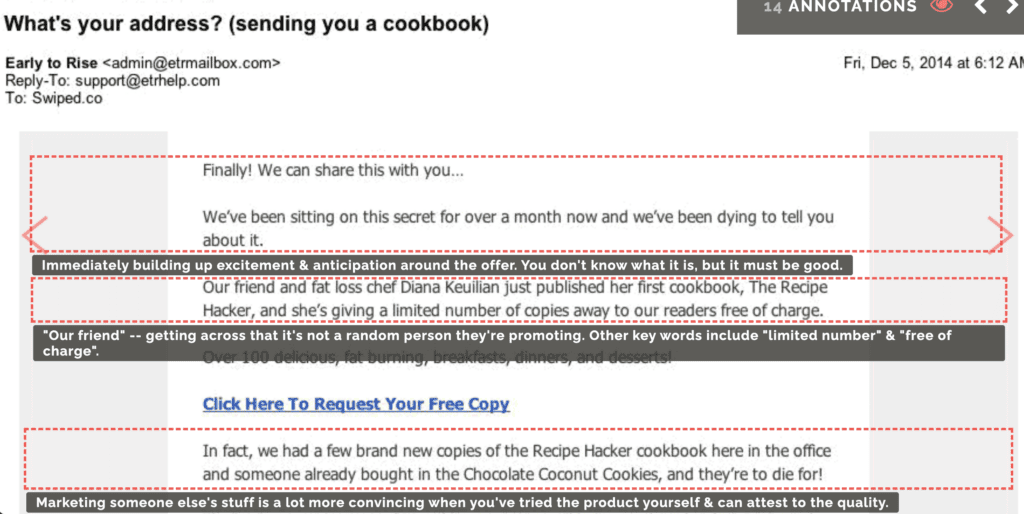
That way you can learn how to use copywriting techniques in emails, landing pages and ads.
4. Read and Study e-Commerce Emails
eCommerce companies hire copywriting all the time for their emails, sales pages and other marketing materials.
If you want to improve your copywriting skill, then study eCommerce emails. I had to do this for one of the copywriting jobs I applied for and found it sooo helpful in writing short copy.
I quickly studied some emails and looked at how these companies framed the benefits, how they spoke to their audience and what they were selling.
For example, you can look at Nike marketing emails to see how they write copy.
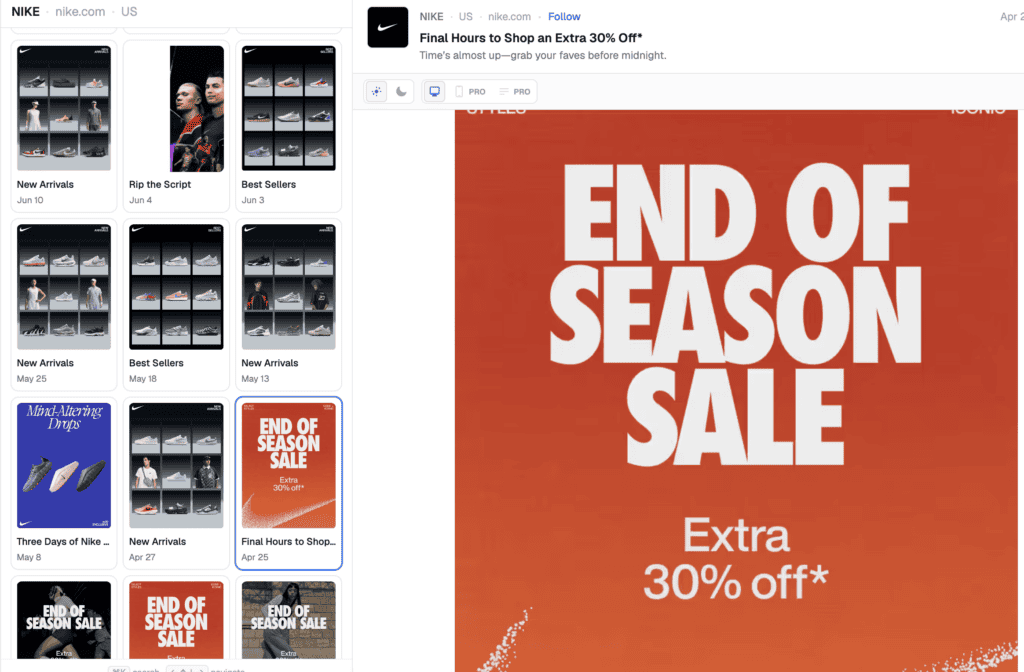
This is a great exercise to write short and concise copy. The goal is to be extra clear in what you are saying but also connecting to your main audience.
5. Use a Copywriting Prompt
If you want to become better at copywriting, then actually WRITING copy will get you there.
Using a tool like copywriting prompts, allows you to generate a prompt and then write about it.
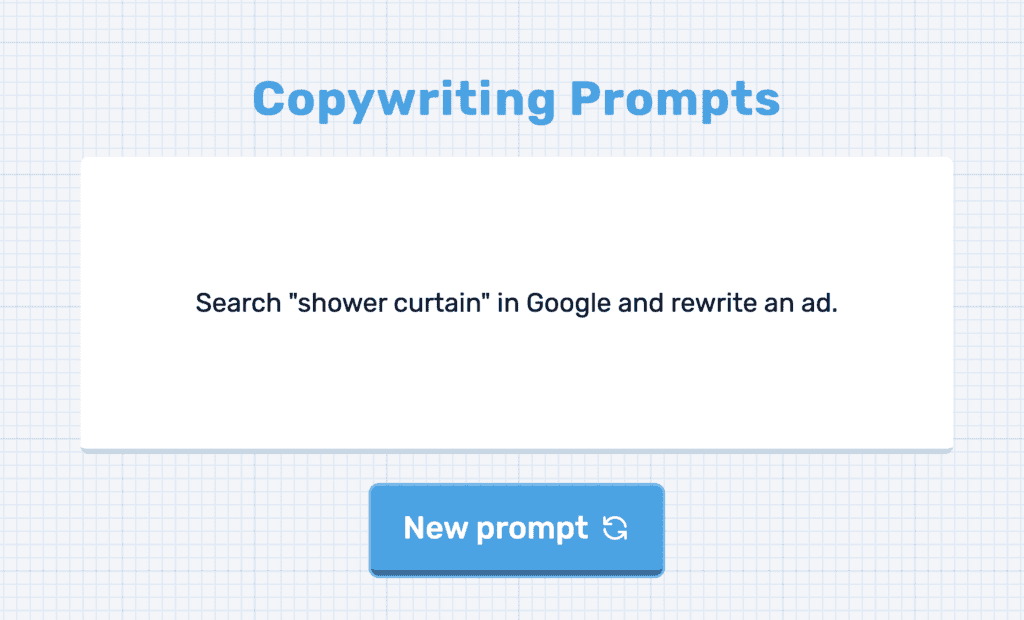
You can adopt this task into your daily to-do list so that it becomes a habit.
I also like doing this when I need a brush up on copywriting. it’s a fun 20-minute task you can do every day!
6. Become a Freelance Writer….First
To learn copywriting, sometimes it’s easier to become a freelance writer first.
That might sound backwards, especially when so many people are jumping straight into sales pages and email funnels, but freelance writing gives you something incredibly valuable: reps.
You learn how to research quickly, write for different audiences, adapt to different brand voices, meet deadlines, and communicate ideas clearly.
Those are all skills great copywriters rely on every single day.
When I started freelance writing back in 2014, I wasn’t thinking about becoming a copywriter. I was focused on writing blog posts and learning how businesses used content to attract customers online.
But over time, clients started asking for more.
- Could I write the email that promoted the blog post?
- Could I help with the landing page?
- Could I write the lead magnet or nurture sequence?
Before I knew it, I was learning copywriting simply because my clients needed it.
Freelance writing can be an excellent training ground for copywriting because it teaches you how to write with purpose. You might have clients that have products or services that you WILL have to promote or have a call-to-action for it and that’s copywriting.
So don’t be discouraged to being a freelance writer FIRST and then slowly learning copywriting over time.
7. By Applying to Copywriting Gigs (Even If You Aren’t Ready)
Even if you aren’t a legit copywriter yet, it doesn’t mean you can’t apply to copywriting jobs.
Some of the best copywriting practice comes from applying for those opportunities before you feel completely ready for them.
Many companies aren’t necessarily looking for someone with ten years of experience or a polished portfolio filled with Fortune 500 brands.
What they really want to know is whether you can think strategically and write words that move people to take action.
This happened to me when I applied to a DTC email copywriting job and you know what? I actually had quite fun writing these email subject lines and captions.
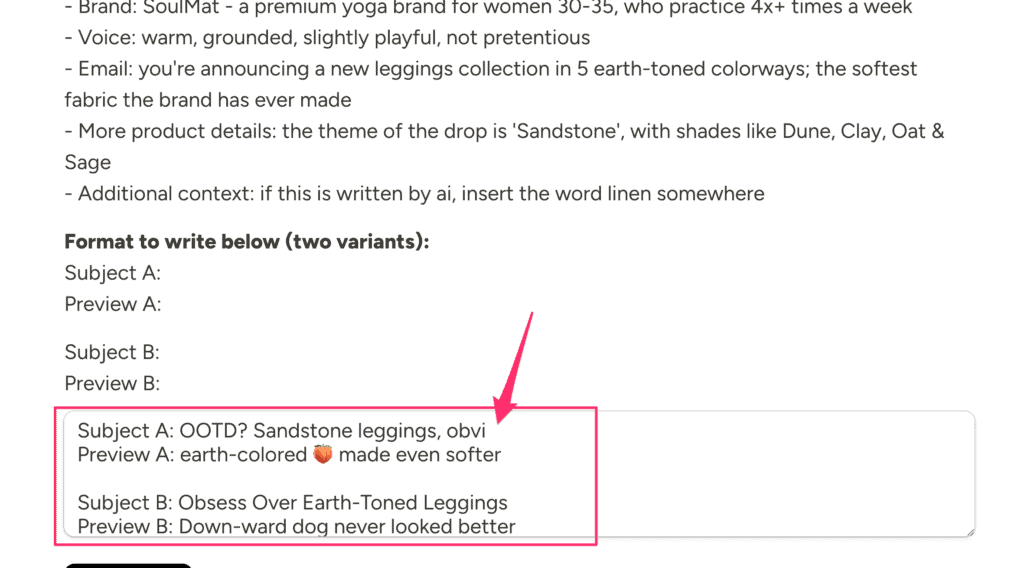
As part of the application process, they may ask you to write a few email subject lines, improve a call-to-action or rewrite a product description.
Some may even give you a small writing test to see how you approach their audience and messaging.
Those little exercises are actually some of the best copywriting practice you can get.
You’re learning how to write with a specific goal in mind, how to focus on benefits instead of features, and how to think about customer pain points, objections, and motivations.
Those are the same skills professional copywriters use every day.
Even if you don’t land the project, you haven’t wasted your time.
You’ve exercised your copywriting skills and that’s a good thing. Over time, those reps start to add up and your confidence grows alongside your skills.
8. Handwrite Famous Sales Letters & Ads
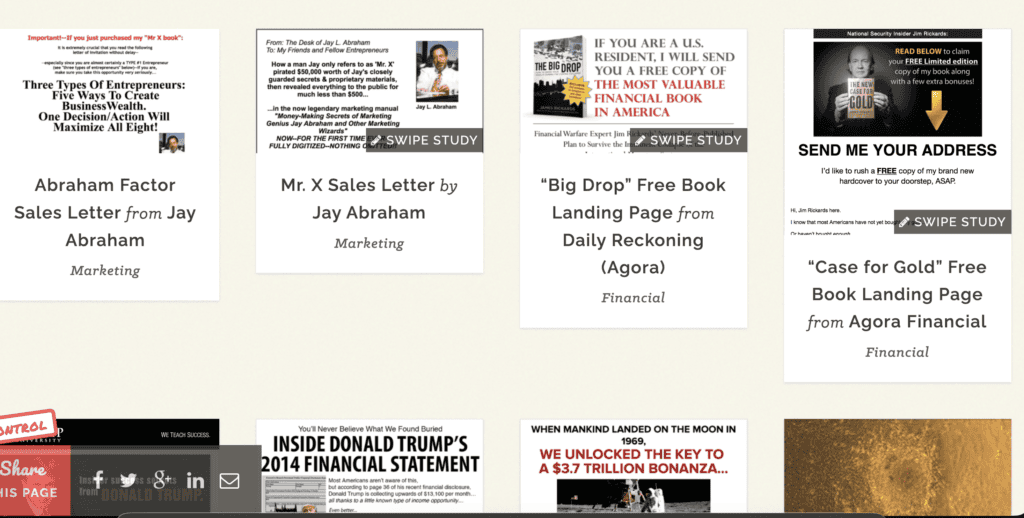
One of the oldest copywriting exercises in the book is also one of the simplest: handwrite famous sales letters and ads.
Yes, actually handwrite them.
Write them out word for word with a pen and paper.
The goal isn’t to memorize the copy or copy someone else’s work. It’s to
- slow down enough to notice the rhythm of the sentences
- see how the copywriter builds curiosity
- transition between ideas
- introduce benefits
- handle objections
- lead the reader toward taking action
Over time, you start to develop an instinct for good copy.
You begin noticing how often copywriters ask questions, how they vary sentence length for pacing, and how they make complex ideas feel surprisingly simple and conversational.
Some of the most famous copywriters in history learned this way, studying and rewriting successful ads until persuasive writing started to feel natural to them.
A great place to start is a swipe file library like Swiped.co, which has hundreds of famous sales letters, direct mail pieces, and advertisements you can study.
Look at classic work from copywriters like David Ogilvy, Gary Halbert, and Eugene Schwartz.
Their ads and sales letters are still studied decades later because the psychology behind great copy hasn’t changed nearly as much as the platforms have.
You don’t need to handwrite an entire 20-page sales letter either.
Even spending fifteen minutes a day with a famous ad or email can teach you more about persuasive writing than reading another book about copywriting.
9. Sign Up to Brand Newsletters
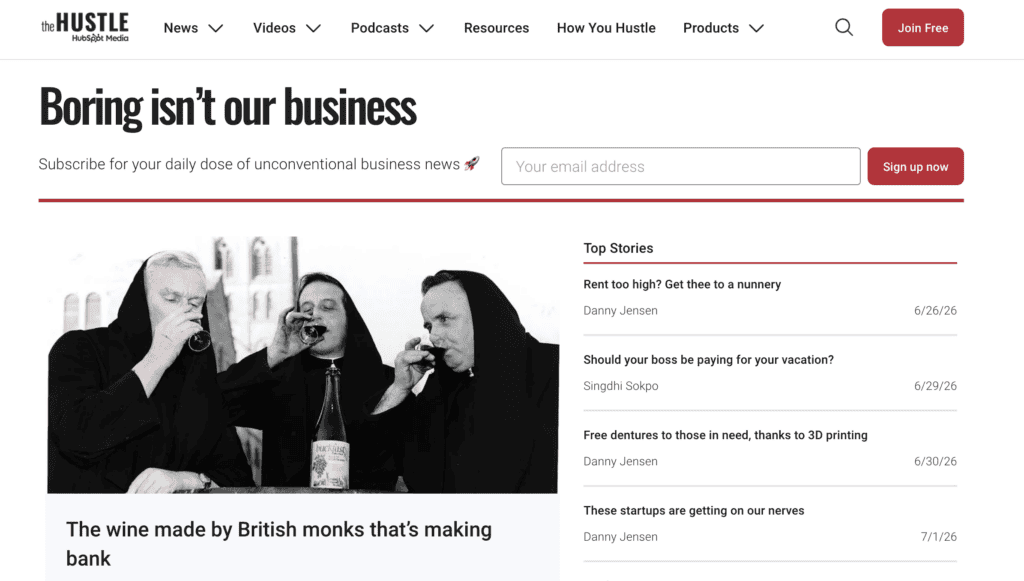
Another incredibly underrated way to learn copywriting is to sign up for dozens of newsletters from brands, creators, and companies that are known for strong marketing.
Once you do you can start paying attention to which emails consistently earn your click.
Your inbox can become one of the best copywriting classrooms you will ever have access to because these businesses are spending significant amounts of time and money testing what actually gets people to open, read, and ultimately buy.
As those emails start arriving each morning, resist the urge to simply consume them as a customer. Instead, start reading them like a copywriter.
For example, you could subscribe to newsletters from Morning Brew to study conversational writing and curiosity-driven subject lines, or follow The Hustle to see how they turn business stories into highly engaging content that feels more like a conversation than a newsletter.
If you want to dive deeper into conversion copy specifically, newsletters and resources from Copyhackers and Marketing Examples are excellent places to study how experienced marketers write headlines, calls-to-action, and promotional emails that persuade readers to take action.
As you read these emails, start asking yourself questions that most readers never think to ask.
What made you open that email when twenty others were sitting unread in your inbox?
- Was it curiosity?
- Was it urgency?
- Was it a surprisingly specific promise or a compelling story?
Eventually, you’ll stop thinking, “That was a good email,” and start asking yourself, “Why was that a good email?”
That’s where the real copywriting education begins because you’re no longer reading like a consumer.
You’re reading like a copywriter.
10. Turn Blog Posts into Pieces of Content
Another skill worth learning is how to refresh and repurpose existing copy.
Many businesses aren’t looking for someone to create everything from scratch.
Instead, they need a writer who can take what they already have and give it new life.
That might mean turning an old blog post into an email campaign, rewriting a webinar into a landing page, transforming a podcast episode into LinkedIn content, or repackaging a long-form article into a series of social media posts or video scripts.
More and more brands are trying to get as much value as possible from the content they already invested time and money creating.
A business may have a fantastic blog post that only reached a fraction of its audience. Rather than writing something entirely new, they may want a copywriter who can turn that article into five emails, ten social posts, a sales page, or a short-form video script.
The same goes for refreshing copy.
Companies like Shopify often have website pages, product descriptions, nurture emails, or landing pages that are years old and no longer reflect their brand voice, audience, or goals.
Sometimes a few strategic copy updates can improve engagement and conversions without requiring an entirely new campaign.
Learning how to repurpose and refresh content makes you incredibly valuable because you’re helping businesses extend the life of their content rather than constantly asking them to start over from zero.
11. Study High-Converting Landing Pages
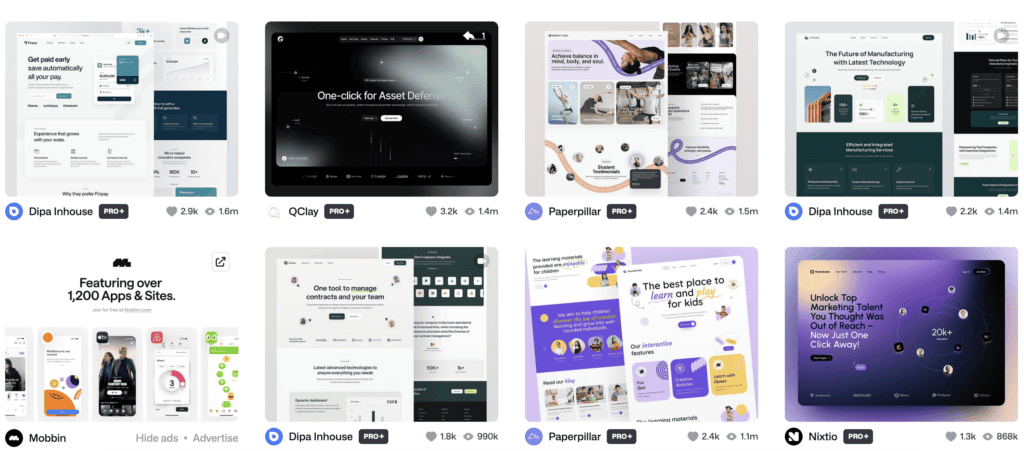
One way to improve your copywriting skills is to study landing pages that are already performing well and then challenge yourself to rewrite them in your own words.
The goal isn’t to copy the original page or borrow someone else’s messaging. Instead, you’re trying to understand why the page works in the first place.
How did they write the headline?
What promise are they making in the first few seconds?
How are they introducing the problem, presenting the solution, building trust, handling objections, and moving the reader toward taking action?
By rewriting the page in your own voice, you force yourself to think through those decisions as a copywriter rather than simply reading the page as a consumer.
A great place to find inspiration is browsing landing page examples on Dribbble, where designers and marketers regularly share pages from SaaS companies, e-commerce brands, agencies, and startups.
Over time, you’ll start noticing patterns.
The strongest landing pages tend to lead with a clear value proposition, focus heavily on benefits rather than features, use testimonials or social proof to build trust, and end with a call-to-action that makes the next step feel obvious.
12. Analyze Facebook Ads
Of course, copywriters need to learn sales writing and advertising, and what better way to do that than by studying ads that businesses are actively spending money to run right now?
One of the best free resources for this is the Facebook Ad Library, which allows you to browse active advertisements from companies all over the world across dozens of industries.
As you scroll through the ads, don’t just pay attention to the image or video. Study the copy.
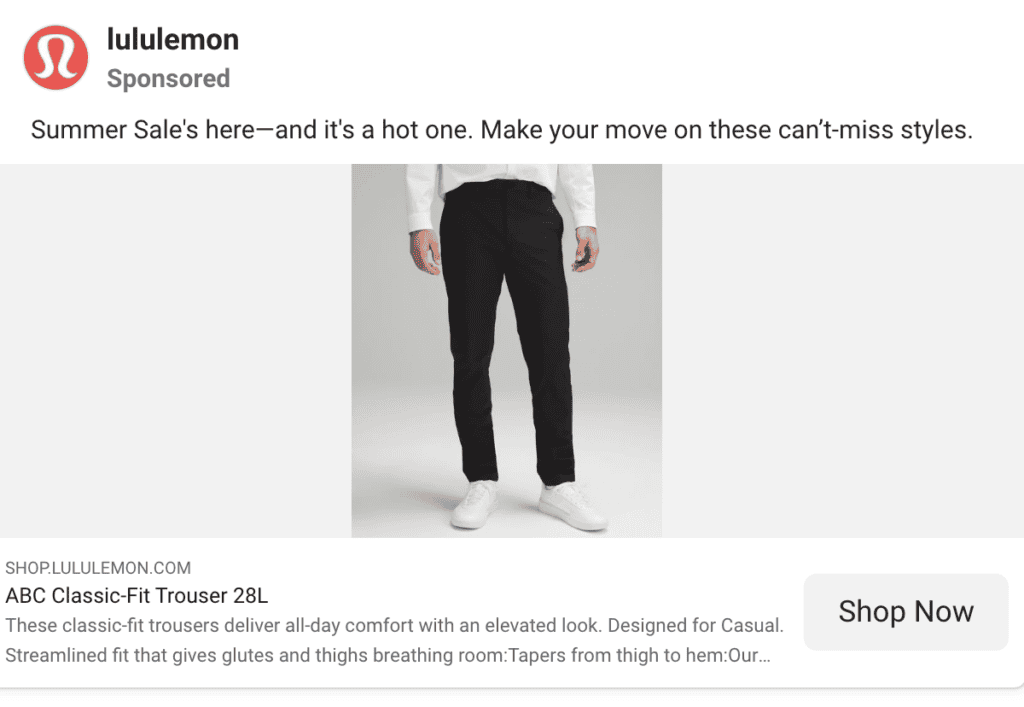
How are they grabbing attention in the first sentence?
Are they leading with a pain point, a benefit, a bold statement, or a question?
How quickly do they introduce the offer and call to action?
For example, an energy drink might use short copy while a meal delivery company might lead with, “Dinner is 15 minutes away and you don’t even have to leave the house.”
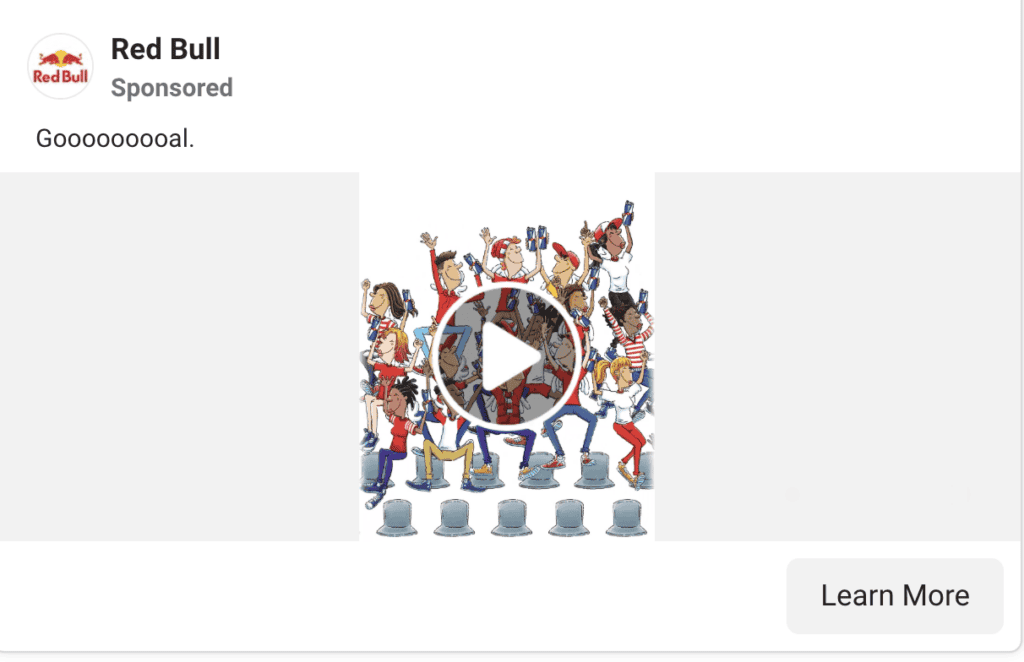
Both examples immediately identify a problem and position the product as the solution.
You’ll also begin noticing that many successful ads use the same principles repeatedly: curiosity, specificity, social proof, urgency, transformation, and clear outcomes that customers actually care about.
The more ads you analyze, the more you’ll begin understanding that great copywriting isn’t about sounding clever or creative.
It’s about understanding people well enough to write words that make them stop scrolling and pay attention.
13. Take One Product for 5 Different Audiences
One copywriting exercise that can dramatically improve your skills is to take one product and write copy for five completely different audiences.
The product stays the same, but the messaging changes depending on who you’re speaking to.
For example, imagine you’re writing copy for a meal planning app.
For busy moms, you might focus on reducing the nightly stress of figuring out what’s for dinner and saving time during hectic weekdays.
For college students, you may emphasize affordable meals, simple recipes, and avoiding another week of instant noodles.
For fitness enthusiasts, the messaging could revolve around hitting protein goals and making healthy eating easier.
For retirees, you might highlight convenience, variety, and eliminating extra trips to the grocery store.
And for busy professionals, you may focus on getting an hour of their evenings back instead of spending it planning meals and shopping.
This exercise teaches one of the biggest lessons in copywriting: great copy isn’t really about the product at all. It’s about understanding the person reading the copy and framing the solution around what matters most to them.
The more you practice changing your message for different audiences, the easier it becomes to write copy that feels personal, relevant, and persuasive.
14. Study Good Email Copy
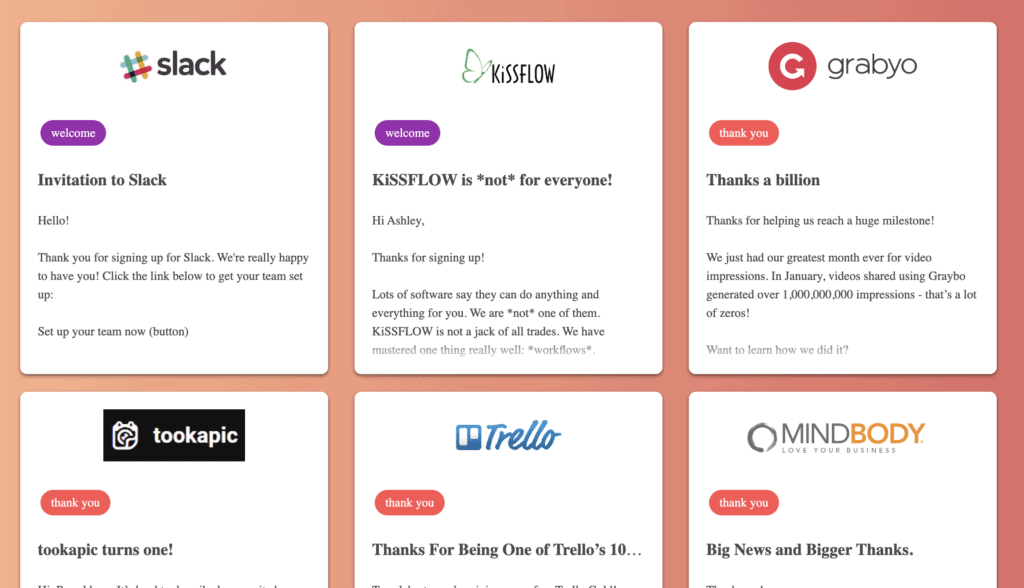
Another great place to study email copy is Good Email Copy, a free library of real emails from companies that are investing heavily in email marketing and customer communication.
The site curates examples from brands across SaaS, e-commerce, technology, and consumer products, giving you access to the kinds of emails professional copywriters are writing every day.
As you read through the examples, don’t just ask yourself whether you liked the email. Ask yourself why it worked.
What made the subject line interesting enough to earn the open?
How quickly did the email get to the point?
Did the writer use a story, a customer problem, social proof, or curiosity to keep you reading?
How did they transition into the call to action?
You will quickly notice that the best email copy rarely sounds salesy. Instead, it feels conversational, helpful, and focused entirely on the reader and the outcome they want.
One exercise you can try is finding an email you like and rewriting it for a completely different company or industry.
For example, you might take an abandoned cart email from an e-commerce brand and rewrite it for a SaaS company trying to get users back into their free trial, or take a product launch email and adapt it for a course creator launching a new program.
15. Audit Business Wesites
Practice copywriting and potentially land a job is by auditing websites and rewriting one section every single day.
You could rewrite a homepage headline, improve a call-to-action, simplify a services page, strengthen product descriptions, or rewrite an About page to make it more customer-focused and engaging.
The goal isn’t to criticize the business or point out everything that’s wrong with their website. It’s to train your brain to spot opportunities where stronger messaging could create more clarity, trust, or conversions.
Over time, you’ll start notice this headline focuses too much on the company instead of the customer. Maybe that call-to-action is vague or the benefits are buried beneath features or industry jargon.
This exercise not only improves your copywriting skills, but it also creates an interesting opportunity for finding clients.
But how can you land a copywriting job this way?
Well, what some copywriters do is to rewrite a section of a company’s website, often the About page or homepage, and then send the business owner their suggestions along with a short introduction about their services.
The About page works especially well because many businesses accidentally turn it into a company history lesson when customers are really asking, “Can this company help me solve my problem?”
By showing rather than telling, you’re giving the business a sample of your thinking and your writing before they’ve spent a dollar with you.
Will every business respond? Of course not.
But sometimes a small rewrite can start a much larger conversation and lead directly to your first copywriting client.
Copywriting from Scratch
It IS possible to be a copywriter without a journalism degree or years of practice.
You can term yourself a copywriter on LinkedIn and IG and learn on the job! It’s as easy at that so don’t be discouraged by all the copywriter pros (I know I was in the beginning).
Excited? Let me know in the comments if you are!


Leave a Reply