
When I first started freelance writing, I spent a lot of time thinking about my writing samples.
Since I didn’t know my writing niche in the beginning, I had no clue what types of samples I should write.
I also spent too much time rewriting my bio or changing parts of my service-based website because I just wasn’t sure what was right.

Meanwhile, I wasn’t actually putting myself out there enough. That’s why I started researching digital marketing tactics to get in front of my ideal client.
And I see so many new freelance writers doing the exact same thing today.
You don’t need to be the “perfect” writer before landing clients.
You need to learn how to position yourself like someone worth hiring and you do that with your writing pitch.
That’s what gets replies.
And if you’re serious about becoming a freelance writer in 2026, these pitching tips will help you stand out way faster.
*Note* At the end of the blog post, I share what type of pitch I like to write, especially if you’re still new and wondering how people are actually landing writing work online.
Let’s get into it.
1. Pick a Niche Early
One of the biggest mistakes beginner freelance writers make is trying to write for everybody.
That usually leads to sounding generic and clients don’t want that; they want specialists.
A SaaS company wants someone who understands software. A finance brand wants someone familiar with finance content. A parenting brand wants someone who understands moms and families.
Even if you’re still new, choosing a writing niche immediately helps you stand out more.
And it makes marketing yourself way easier too.
If you need help choosing a profitable niche and setting yourself up as a freelance writer, my course WriteTo1K walks you through the exact process step-by-step.
2. Create Relevant Writing Samples
You do NOT need paid clients to create writing samples.
Seriously.
This is where so many new freelance writers freeze.
Instead, you can create your own niche writing samples.
Why is that helpful with pitching clients? Because in your pitch, you’ll provide relevant samples to show prospects you know their industry inside and out.
So, it makes sense to ONLY create relevant samples. This was hard for me because in the begnning, I created three writing samples in completely different niches: parenting, education, and mental health.
It took me time to start creating writing samples of the type of writing I want to do for clients.
So, for me, as a SaaS content writer, I need to provide SaaS articles like reviewing a content platform tool or service.
And if you’re an eCommerce writer, your writing samples would focus around products and selling/marketing.
So, just remember, three strong niche samples are better than ten random pieces.
For more help, check out my Writing Sample Starter Kit for new writers.
3. Build a Writer Website — Not Just a Portfolio
A simple writing portfolio page isn’t enough anymore but I understand that if you don’t have the budget, it’s better than nothing.
But with a whole writer website, clients can gain information about:
- Who you help
- What you specialize in
- What services you offer
- Why you’re a good fit
Your website should position you like a real business owner and act as a portfolio for your services.
In my YouTube video, I share with you how your writer website can sell your services, because this is what you want your writer website to do for you.
When a potential clients comes to your writer website they will immediately know if you’re the writer for them by how professional and spot-on your content is.
4. Create a Professional Email Signature
A few years ago, a Writeto1k student mentioned how her email signiture was helping her get writing jobs. I was intrigued.
I asked her to show her email signiture and I was like, “Wow! What a neat idea! I need to share this!” And I did.
An email signature after your pitch does all the legwork for you.
It’s an easy way for clients to remember you and know where to find your information to contact you.
Creating an email signiture takes maybe 10 minutes but helps you look way more established.
Make sure to include:
- Your name
- Your niche
- Website
- Portfolio link
- LinkedIn profile
These small details will build trust and help you also build your brand.
5. Pitch Businesses Inside Your Writing Niche
Once you choose your writing niche, focus most of your pitching inside of your niche.
Why? This will make finding the right clients soo much easier. You can search “list (niche) businesses” or “list (niche) writers” to see who writes in your writing niche.
Sometimes you have to play around with your search term. For example, I like to put in the type of company I want to write for.
So, if I wanted to write similar content like I did for Whop, a course platform, then I would put into Google, “list course platform businesses.”
AI will give you an organized and categorized list of these types of businesses you want to pitch to.
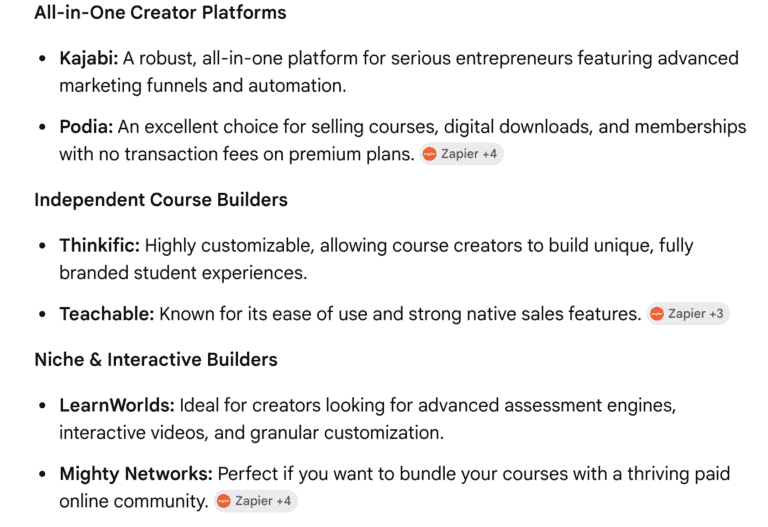
And hopefully, since you studied your niche and used that information to sell on your writer website, the businesses you researched will be perfectly aligned to your messaging.
That alignment makes clients more likely to hire you and that is something you want!
6. Pitch Clients Who Already Value Content
One of the biggest mistakes I made early on as a freelance writer was pitching to any and every business I wanted to.
I pitched to:
- VFX company
- Desnist
- Meal Prep service
- Career/HR business
And you know what? I landed all of those pitches…I know!
This would never happen nowadays, only if you worked with a content agency (but you wouldn’t have any bylines because it would be ghostwriting).
And those clients never valued content. They didn’t give me a keyword to focus on and didn’t want more than 1,000 words.
But to stand out as a freelance writer in 2026, you need to find clients that values content.
When a businesses understand what their content does for them, then they will value YOU – the freelance writer – and will pay top dollar for your knowledge and skill.
But how do you know if a buisness values content?
First, look for brands publishing:
- Blog posts
- Email newsletters
- SEO articles
- LinkedIn content
These businesses already understand why content matters.
Then check out the content. Do they have multiple bylines on their blog? Are their social media posts helpful and working to engage the public?
When you do your vetting, it makes your job – the writing – easier.
7. Research the Client Before Pitching
While part of your vetting is figuring out if it’s worth it to pitch this business, most of your vetting will be to research the client.
You don’t need to spend an hour researching every prospect but spend ten minutes checking:
- Their website
- Blog
- Any podcasts they were featured in
- Recent content
…can help you build a stronger pitching system.
Clients can tell when you actually looked into their business by the personalization you put into your pitch.
8. Engage With Clients Before Pitching
One thing I try to do on a regular basis is comment on posts from content marketers and managers.
They get notified of your comment and hopefully read what you wrote!
This works really well on LinkedIn where many write fun and engaging posts like Spencer Mahoney did.
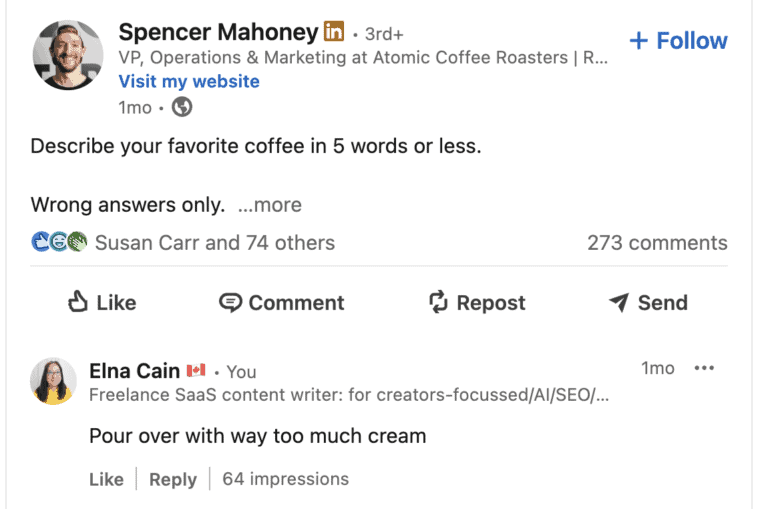
Then when your email lands in their inbox, your name already feels familiar.
And this builds trust and people hire people they trust!
9. Use the Client’s Name
I know this is a no brainer but many people still think being formal in pitches is the way to go….it’s NOT.
Don’t start your pitch with:
“To whom it may concern.”
Or:
“Dear Sir/Madam.”
This reeks cookie-cutter template and generic pitch that no one decided to personalize. Whenever I see this in my inbox, I know they don’t even know my real name or my blog or what I do.
Those emails are trashed instantly.
It’s best to be simple when addressing your pitch:
“Hi Sarah,”
“Hey Amanda,”
“Hi Jake,”
Your pitch should sound human so don’t be afraid to be conversational.
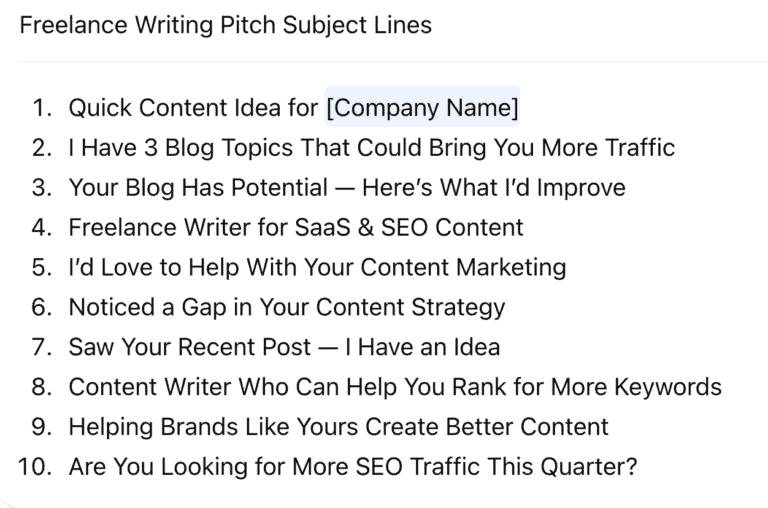
10. Write a Subject Line That Gets Opened
One of the things I wanted to know when I first started pitching was the subject lines they used.
Why? Because then I would know what subject line got the person to open and eventually hire that writer.
So, your subject line matters a LOT.
Avoid boring subject lines like:
- Freelance Writer Looking for Work
- Writing Services
- Hire Me
Instead try:
- Content idea for [Brand]
- Quick blog suggestion for your site
- Saw an opportunity for your content
Simple curiosity works better instead of sound desparate and wanting work right now.
Play around with different subject lines and you can even use Claude or ChatGPT to help you come up with clickable email subject lines.
11. Mention Your Niche Throughout the Pitch
When writing your pitch and describing your services and what you do, make sure to be specific in your title.
Don’t just call yourself a “freelance writer.” This is too broad and generic and shows potential clients you don’t have a niche (and that translates into not knowing the industry).
Instead, be specific with your freelance writing title.
Examples:
- SaaS freelance writer
- Finance content writer
- Email marketing writer
- Parenting blog writer
Specific positioning helps clients instantly understand where you fit and can help you land that writing gig faster.
12. Remove Weak or Uncertain Language
New freelance writers constantly weaken their pitches with phrases like:
- “I think I could…”
- “I might be able to…”
- “I was wondering if…”
This is something I was actively thinking so that I didn’t come off as an imposter.
Instead say:
- “I can help with…”
- “I specialize in…”
- “I noticed an opportunity to…”
Confidence matters because then it appears like you’ve been doing freelance writing for a while (even if you haven’t).
13. Sound Like a Real Person
One of the best pitches I ever received sounded casual and natural.
I know this person knew who I was because they told me they were a subscriber of my YouTube channel and found me on LinkedIn.
This pitch wasn’t robotic or stiff. It just read natural and conversational and this is how you need to appear to a potential client.
When they can easily read your pitch and feel it’s authentic, then there’s a higher likelihood they will reach out.
But what about AI? Can you use AI in your pitch?
You can but I would use it as a guideline and then I would have to edit in the personalization elements to make it more authentic and human sounding.
14. Keep Your Pitch Shorter
Most beginner writing pitches are way too long and content markers just don’t have the time to read long pitches.
You don’t need five paragraphs explaining your background or a long-winded speech about how well your writing is.
The goal is simply to start a conversation. It’s like your pitch is the knock at the door.
Shorter pitches are usually easier to read and easier to reply to.
15. Get to the Point Quickly
When writing your pitch, don’t spend three paragraphs warming up.
Lead with something relevant immediately to get the attention of the person reading your pitch email.
Example:
“I noticed your blog hasn’t been updated recently and had a few content ideas that could help improve organic traffic.”
This is clear and to the point. The next sentence can tell them who you are and what type of experience you have.
Make each sentence count in your pitch!
16. Stop Sending Huge Attachments
This was a “big” thing a decade ago. People loved sending attachments and new freelance writers would write their pitch and attach their writing samples (because they weren’t published online).
Clients are busy and just like they aren’t going to read a long pitch, they definately aren’t going to click that attached PDF.
It’s better to link to your website or portfolio so they can quickly skim your sample and website copy if they are interested.
17. Add Social Proof
Social proof helps build trust quickly and that’s what you want when you’re sending dozens of cold emails.
Types of social proof you could include might be:
- Testimonials
- Brands you’ve written for
- Publications
- Audience growth
- Results
Even small wins help because it shows your experience working with other businesses. If they hired you and you helped them achieve THAT, well, then maybe you can help MY business achieve that and more.
And if you’re brand new?
Can you show social proof? Yup! Use things like:
- Your blog
- Your niche expertise
- Consistent content online
This does mean you need to be “out there” a bit before you pitch. Writing on Medium and having a LinkedIn page can be enough to land a client.
18. Build Credibility Naturally
By now, many freelance writers are using pitch templates to make their job eaiser.
But that means people are saying the same things over and over again.
For example, stop saying:
“I’m a highly passionate and creative writer.”
This sounds very cookie-cutter. It’s much better to show credibility instead.
You do this by sharing your niche and content ideas. Maybe you noticed a gap in their content. Let them know that and give them blog post ideas to fill that gap.
Share your experience writing content online or how you quickly built up a LinkedIn account. Sharing things like that just helps you look more credible.
19. Offer a Small Strategic Suggestion
Just like mentioning a content gap, a good pitch will offer a small strategic suggestion to get the client to go, “hmm.”
This does require you to spend time on their website and blog page. It could also mean spending time on their social pages.
You might have noticed that many of their social posts aren’t aligned with the blog content and in your pitch, you find a way to align them.
That’s a small strategic offer.
Other types include
- Missing blog topics
- SEO gaps
- Weak headlines
- Outdated content
Position yourself like someone who thinks strategically and they will give you as MORE than a freelance writer and that means MORE MONEY.
20. End With a Strong Call-to-Action
Don’t end your pitch with:
“Let me know what you think.”
That puts pressure on the client to figure out what happens next. It’s also vague and doesn’t direct the person what to do.
Instead ask something simple:
- “Would you like me to send over some relevant samples?”
- “Open to discussing content support this month?”
- “Interested in a few content ideas for your blog?”
You can also be explicit and give them a date and time too.
21. Follow Up Instead of Assuming They’re Ignoring You
This is something beginner freelance writers almost never do enough of (including me!).
I would send one pitch to a business and move on. That was it!
I’d get silence and immediately assume:
“They hated my email.”
“I’m bothering them.”
“They’re not interested.”
But what I missed was that business owners are just busy.
So, it’s my job to be top of mind for them.
A simple follow-up email a few days later can completely change the outcome.
And no, you do not need to overcomplicate it.
Keep it short and friendly.
Something like:
“Hey Sarah, just wanted to quickly follow up on my last email in case it got buried in your inbox. Still happy to send over a few content ideas if helpful!”
That’s it.
A lot of freelance writing clients are landed in the follow-up — not the first pitch.
And this is one of those habits that separates writers who consistently land clients from writers who give up too early.
If you need more help, check out my free lesson in Writeto1k about the follow-up email. This lesson is a gold mine and has helped dozens of students land clients.
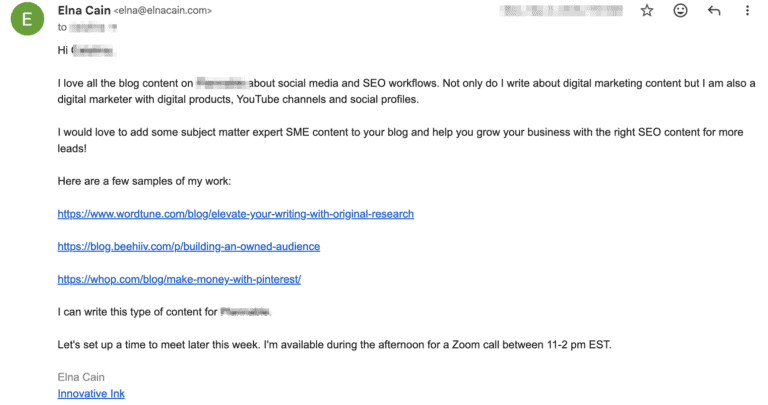
What a Freelance Writing Pitch Looks Like
I still send off pitches to companies I want to collaborate with. Not all of them yeild content writing jobs, but the ones that do, I pay attention to.
Here’s a pitch that I recently used to help me land a gig.
Final Thoughts
A lot of freelance writers stay stuck because they spend years preparing instead of practicing.
The writers who grow are usually the ones consistently:
- Pitching
- Improving
- Learning positioning
- Building authority
- Refining their message
That’s what separates writers who eventually land clients from writers who stay invisible online.
Some writers do a pitching challenge to help inspire and push them to pitch.
And if you want help choosing a niche, building your samples, creating your website, and learning how to land freelance writing clients step-by-step, check out my course WriteTo1K.
It’s designed specifically for beginner freelance writers who want to start building a real writing business online.



Leave a Reply