
When I first started freelance writing, nobody knew who I was.
I didn’t have a portfolio.
I didn’t have industry connections.
I didn’t have a niche.
And I definitely didn’t have the confidence I have today.
Most days, I felt like I was Googling my way through a career I wasn’t even sure I was qualified for.

Yes, I had (and still have, at times) imposter syndrome as a new freelance writer.
Back a decade ago, I was a stay-at-home mom with twin toddlers climbing onto my laptop while I tried to figure out what “content marketing” even meant.
I didn’t know which platforms mattered or even how to pitch. I didn’t even know what counted as a “clip.”
But I did know one thing: I wanted this to work.
So I treated every day like a tiny experiment.
One pitch.
One guest post.
One new writing sample.
One job board application.
One comment on a company’s blog.
None of those actions looked life-changing — and they weren’t.
But together? They built the foundation for everything that came later.
Every writing job I landed in those early months came from sheer consistency and a lot of trial and error.
Some pitches flopped.
Some “perfect” samples got ignored.
Over time, I realized this:
Paid writing jobs don’t appear magically. You create opportunities long before a client ever finds you.
Clients aren’t watching you from afar waiting to reach out. They are busy so they aren’t seeing your effort and all the hours you put into learning about freelance writing.
They only see the moment you show up, which should be confidently, and consistently.
But when you’re a newbie at all of this, you have doubts that you can even get a freelance writing job.
So, how can you build that momentum even if you’re starting from zero?
Here’s the system that works, whether you’re brand new or rebuilding your client pipeline from scratch.
1. Build a Simple, Reliable Client-Finding System
If you’re new, your biggest challenge isn’t only talent, t’s visibility.
People can’t hire you if they’ve never heard of you, right?
But you don’t need to be everywhere at all times or even master every social media platform.
And you definitely don’t need to post 50 times a day hoping someone notices.
You only need two or three consistent channels bringing in potential clients.
This is exactly what I tell my students in my Write Your Way to Your First $1k program.
When I started, my channels were:
- Job boards (yes, they still work if you know how to stand out)
- Guest posting
- Warm pitching/cold pitching
Later, LinkedIn became one of my strongest inbound sources.
But I didn’t start there. I built up slowly, and that’s what I recommend for you too.
2. Turn Referrals Into a Routine (Even When You’re New)
Most new freelance writers assume referrals only happen when you’ve been around forever.
Not true.
Even your earliest clients can refer you but you have to make it easy for them.
When I delivered projects, I noticed something:
Clients were happiest the moment I turned in that final draft. That’s when I started building a simple habit into my offboarding process:
Ask for a referral or testimonial at the moment of peak satisfaction.
Most freelance writers mess this up by being vague:
“Let me know if you know anyone who needs writing.”
This is too broad and too easy to ignore.
Referrals turn into your warmest, easiest-to-close jobs, even when you’re still building your reputation.
For more help, I share my best tips in my course Writeto1k.com.
3. Use Outreach That Doesn’t Feel Cold or Spammy
Cold pitching straight from “Hello!” is rarely effective anymore.
The inboxes of marketing managers, founders, and editors are slammed. Even hyper-personalized cold emails feel like cold emails.
What does work is warm pitching. This is showing up before you need anything and works on building an authentic relationship.
Here’s what I do, and what beginners can do too:
- Comment on their LinkedIn posts
- Share their content
- Reply thoughtfully to something they posted
- Engage with their company announcements
- Notice when they’re hiring (huge opening!)
- And make sure to follow them and other important people (e.g. content marketer)
By the time I send a message, my name is already familiar and makes it easier for them to hire me.
When I pitch companies hiring a full-time writer, I often offer something specific:
“I can bridge the gap while you’re hiring, so your content doesn’t stall.”
Once you have your foot in the door, it’s easier for the client to just hire you for their content instead of weeding through countless resumes or pitches.
4. Build Visibility on LinkedIn (Even Before You Feel Ready)
I know, I know….I keep harping on LinkedIn.
I’ve written posts and I seem to talk about it in every piece of content I create.
I’m sorry but LinkedIn really is the place to market your freelance writing business effectively.
So, the quicker you start a LinkedIn profile and connect and follow others in your industry, the sooner important people will notice you and eventually hire you.
Here’s a video I did about making a LinkedIn profile that gets clients.
To build your LinkedIn followers and connections, start posting more consistently.
Now I’ll be the first to tell you that I’m not that consistent on LinkedIn and I go in spurts but that’s okay. If you do that, that’s fine but try to stick with it for more than a month.
Create small posts and share simple lessons. I also talk about my processes to show potential clients my knowledge.
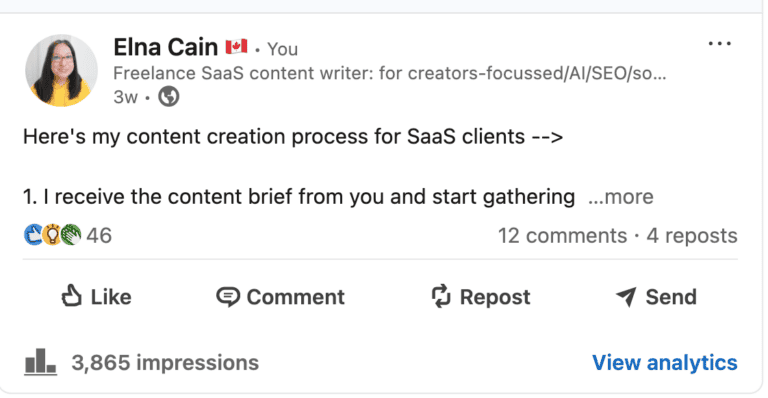
And it worked.
The weeks I first starting freelance writing and using LinkedIn for the first time, I was already showing up.
When I checked my email, I had warm leads in my inbox.
The one is the first ever one I had and I was ecstatic!
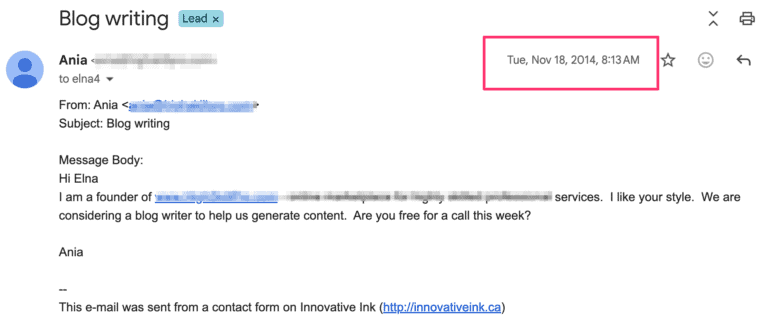
And I know they saw my profile on LinkedIn because at that time I wasn’t on Google and my guest posts hadn’t come out yet.
So start posting on LinkedIn and connecting with the people that hire writers!
5. Join Niche Communities (Your Future Clients Hang Out There)
This is one of the most underrated places beginners find paid writing jobs.
Not Facebook groups full of other freelancers competing for the same gigs.
But niche spaces where your clients actually spend their time:
- Slack communities for SaaS founders (I share the exact Slack groups to get into in my course Writeto1k.com)
- Discord servers for e-commerce operators
- Subreddits for niche business owners
- Industry forums
- Private membership groups
One of my favorite early wins was from a tiny community of solopreneurs where I simply answered questions and shared ideas.
People started DM’ing me:
“Hey, could you help me write something like that?”
I didn’t have to pitch or chase down clients on Upwork. I just had to show up and help consistently.
And yes — partnering with complementary freelancers works too.
Designers, SEO specialists, VA’s, branding pros often serve the same clients but don’t write.
I’ve referred dozens of writers to opportunities that weren’t right for me and received referrals back.
Those small networks can quietly create thousands of dollars in writing work.
6. Create “Micro Proof” Even When You Have No Portfolio Yet
New freelance writers get overwhelemed when they see they have to create writing samples. I teach students to create a minimum of three samples.
But you know what? If this is too much, you can do a micro project just to get out there.
Micro proof sells. There’s no need for a giant portfolio or all those samples at the moment..
Examples of these tiny evidence pieces are:
- 2 before/after rewrites
- 1 content audit
- A short writing sample tailored to a niche
- A breakdown of a brand’s content gaps
- A mini case study from a small project
Micro proof can build trust with clients extremely fast since it’s easy to scroll these teyps of content on mobile (probably how your prospect clients view your content).
Some of my students land their first writing jobs using just:
- a single blog post sample
- a content refresh example
- or a one-page PDF breakdown of “here’s what I’d do with your blog.”
You can create these in a weekend.
7. Guest Post Strategically (The Old School Method That Still Works)
Guest posting was how I got in front of my ideal clients.
I didn’t write for huge sites at first. Instead, I wrote for smaller niche blogs that had highly engaged audiences.
For example, one guest post was for an autism blog and another one was for a mom’s magazine site.
(Here’s a screenshot of a section on my portfolio in 2014).
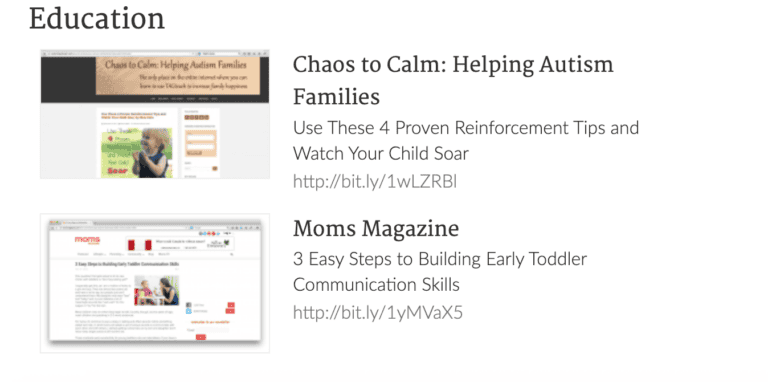
The magic is in your byline and bio.
If someone needs a writer, and your article helped them, they will click through.
I still recommend this because:
- It builds credibility fast
- It gives you published samples
- It puts your name in front of the right people
- It gets you backlinks, which help your website rank
When no one knows you, a well-placed guest post makes them know you.
And you can use guest posting to create those three writing samples I tell my Writeto1k students!
It’s a win-win situation!
8. Apply to Curated Job Boards (But Do It the Smart Way)
Job boards aren’t dead.
The wrong job boards are. There are still plenty of job sites and curated job boards that can get you a paid writing job.
Skip general ones and use high-quality, curated boards with fewer applicants:
- ProBlogger (my first big client came from here)
- Quoted for media jobs like journalists
- All Things Freelance Writing Job Board (curated by a journalist)
- Superpath Jobs (for B2B/SaaS writers)
The key is responding with:
- a tight pitch
- one relevant sample
- a brief explanation of why the brand stood out
When you apply like a professional instead of a volume-based spray-and-pray candidate, you rise to the top quickly.
9. Pick Two Strategies and Commit for 90 Days
Freelance writing right now is different from a decade ago. Within a month I was getting leads and landing clients.
Now? It can take up to a month or more to land a paid writing job. But that’s not to say that other writers have had success much (much) sooner. They weren’t dabbling in this. Instead, they were committing to freelance writing.
So, I want you to pick two channels and commit for 90 days.
- Warm outreach
- Referrals
- Niche communities
- Guest posting
- Curated job boards
Stick with them for three months.
During that time:
- Track where leads come from
- Test small improvements
- Show up consistently
- Build tiny pieces of credibility
FYI I do have workbooks and templates in my course Writeto1k to help you through this.
Get Noticed and Land Paid Writing Jobs Today
There ya go! I hope you can see that even if you are new to freelance writing, you can get noticed but it starts with creating content and connecting!
Good luck and let me know on the comments how you found your first paid writing job!



Leave a Reply