
You’ve decided to go after freelance writing but you have no idea how to land writing jobs that actually pay.
If you already have your website and writing portfolio set up, you’re ahead of most beginners.
If not, consider checking out my YouTube channel for that help and more.

When I first started, I thought clients would just “find” me once my site was live. They didn’t at first (later they actually did!).
I had to reach out. That’s where pitching comes in.
You can pitch through job boards or calls for writers, and that can help you land a writing job quickly.
But they typically aren’t very high paying so I suggest you foucs on landing 2-3 clients from job boards to get the experience.
But to get steady, high-paying work, that’s where cold emailing is really effective.
It puts you in front of real decision-makers instead of competing with hundreds of applicants.
I’ll show you exactly how to cold email for freelance writing gigs, plus how to use the same approach for listed jobs.
First, let’s get clear on what cold emailing actually is.
What is Cold Emailing?
Cold emailing is when you reach out to someone who doesn’t know you yet.
There’s no referral, no introduction, and no prior relationship.
It’s just you starting the conversation.
You might also heard of warm pitching or warm emails.
A warm email is different.
That’s when there’s already a connection through a person, event, or referral.
With cold emailing, you’re creating the opportunity from scratch.
When you cold email for writing work, the person on the other end usually isn’t looking for a writer.
Your job isn’t to “sell” yourself in the first email but it’s to start a real conversation and put yourself on their radar for future work.
Is Cold Emailing an Effective Way to Find Freelance Jobs?
Yes, it works—but only if you treat it like a process.
Cold emailing is a numbers game.
You’ll send a lot of emails to get a few wins.
For some people, they end up sending hundreds of cold emails to hear back from a potential lead.
Others, only send a few.
Most won’t get replies.
Some will be polite no’s.
A small handful will turn into paying clients.
Early on, the rejection bothered me more than I expected. It wasn’t just rejection from pitches, but also from other writers.
It made me almost quite freelance writing altogether.
But once I stopped taking it personally and focused on showing up consistently, results followed.
Now, I’ll be the first to tell you, I don’t use cold pitching or emailing very often, but when I do, it works.
In my Writeto1k program, I have a 30 day challenge and in that challenge, you are expected to cold pitch.
Many students (and even I) have landed writing jobs that way.
If you’re ready to send the emails and stay consistent, this can work for you too.
Next, I’ll show you exactly how to structure a cold email that gets replies.
How to Write Cold Emails That Get Responses
A cold email that lands clients is about more than the pitch itself.
The work you do before you send it—and what you do after—plays a big role in whether you get a reply.
Most freelance writers only focus on writing the email and skip the prep and follow-up. That’s usually why their inbox stays quiet.
Stay with me here.
This process is simple once you see the full picture.
The steps below walk you through it from start to finish, so you always know what to do next.
How to Prepare to Send a Cold Email
Once you’ve picked your writing niche and created solid samples, your next step is getting familiar with the companies in that space.
As you research, keep a running list of brands you’d actually like to write for.
You can use LinkedIn to find these companies.
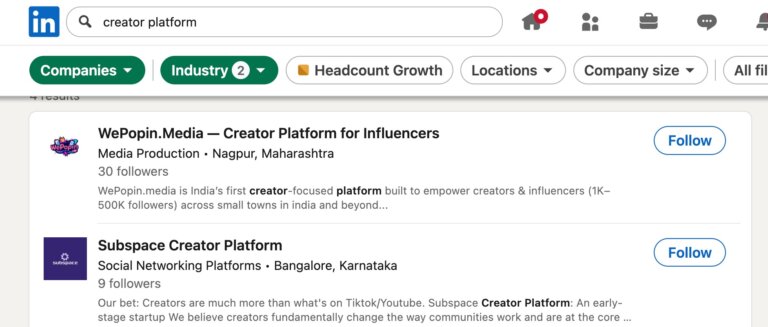
Spend a few minutes finding these company’s LinkedIn pages and then over to each site.
Look at their blog, their product pages, and how they market themselves.
You’re looking for gaps you could help fill with content.
This step matters more than most freelance writers realize.
When you understand what a company does and what they might need, your pitch becomes specific instead of generic, and that’s what gets replies instead of being ignored.
And you know what?
You can use ChatGPT to help you figure out the content gaps a company needs.
Just ask it and give the link to the company.
For this example, I asked ChatGPT to look at the content gaps for Teachable’s website.
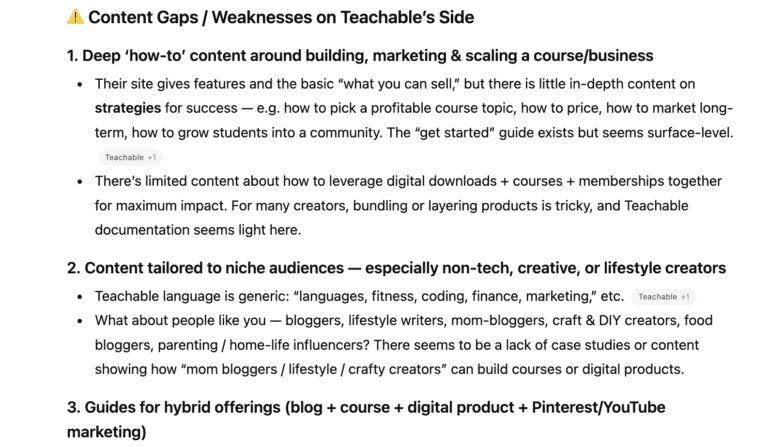
You can also do it the “old” school way too!
1. Visit Their Website
For example, visit their website and take a quick look around.
What do they actually sell?
Do they run a blog?
If so, how often do they publish?
Pay attention to their tone.
Is their copy casual and friendly or polished and corporate?
Are they focused on education, sales, or both?
These small details tell you exactly how to position your pitch.
When you match their style and speak to what they already care about, your email sounds relevant instead of random.
2. Find Them on Social Media
Next, take a few minutes to review their social media. This gives you a real look at how the business shows up day to day and not just how they present themselves on their website.
Look at what platforms they use most.
Are they active on LinkedIn, Instagram, or X?
What type of content do they post—educational tips, product promos, behind-the-scenes updates, or customer stories?
Pay attention to how they communicate.
Do they write in a casual, friendly tone or keep things more corporate?
Do they use short captions, emojis, and storytelling, or straight-to-business updates?
You can use this information directly in your pitch.
For example, if they share weekly educational posts but haven’t published a blog in months, you can suggest repurposing that content into articles.
If their tone is relaxed and conversational on social, mirror that in your email instead of sounding stiff.
This small research step helps you personalize your message and show that you didn’t send a mass email—you chose them on purpose.
3. Pitch a Specific Person
Whenever possible, address the person you’re pitching by name.
It instantly makes your email feel personal and not automated.
Start on the company’s website.
Check the About, Team, or Careers pages to find the person in charge of marketing, content, or partnerships.
If there’s no email listed, head to LinkedIn, search the company, and click the People tab to find the right contact.
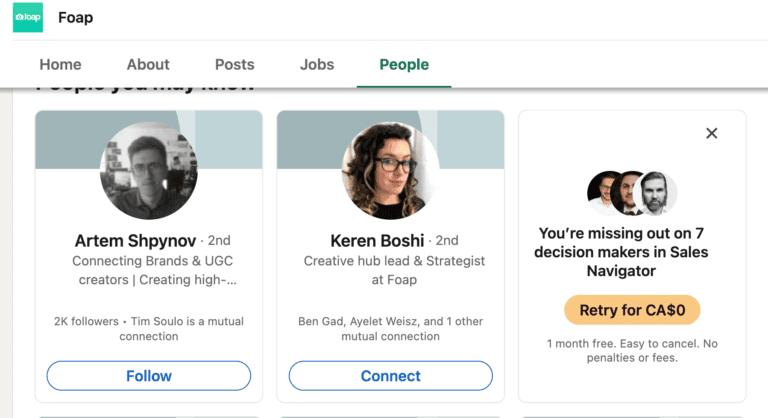
You usually won’t see email addresses on LinkedIn—and that’s normal.
This is where an email lookup tool helps.
Hunter.io is still reliable for finding verified business emails directly from a company’s website.
If Hunter doesn’t show the exact email you need, look at the format it pulls. For example, if you see:
You can plug the correct name into that format and then run it through an email verifier inside Hunter to confirm it’s valid before sending.
If you truly can’t find a name or direct email, use the company’s general address (like [email protected] or [email protected]).
In your greeting, avoid “To whom it may concern.” Use something like:
Hello [Company Name] Team,
It still feels intentional and it keeps your email from sounding cold and generic.
For the most part, though, if I don’t know the direct name I’ll just use a generic, “Hey” or “Hiya.”
This is friendly and works well since it’s simple.
How to Write a Cold Email Pitch
Writing a cold email that gets a reply comes down to including the right information in the right order.
A strong cold email has five core parts. I’ll break each one down below.
1. Make a Personal Connection
Using the person’s name helps, but real personalization goes deeper than that.
I don’t jump straight into the pitch. I use my first one or two lines to explain why I’m reaching out and to show that I picked them on purpose.
Personalization doesn’t need to be complicated.
Spend a few minutes on their website and look for:
- A recent product launch or announcement
- An award or press mention
- A blog post they published
- A case study they featured
Then reference it directly. For example:
- “I saw your recent product launch for ___.”
- “I read your article on ___ and noticed ___.”
- “Your case study with ___ caught my attention.”
This tells them immediately that your email isn’t generic and that alone increases your chances of getting a response.
2. Build Credibility
After your opening, the next step is to briefly establish why you’re worth listening to.
This is where you introduce yourself and share your most relevant qualifications.
Keep this part focused on their business.
The goal isn’t to list your full background, it’s to show that you’re a strong fit for what they do.
In a strong credibility section, you might include:
- Your role as a freelance writer
- How long you’ve been writing (if applicable)
- Your specialization or niche
- Similar clients or industries you’ve worked with
- One clear result you’ve helped a client achieve
- A recognizable publication or brand you’ve been featured in
For example, if you’re pitching a SaaS company, mention your SaaS work not unrelated writing experience.
If you’re new, that’s fine too.
You can lead with your niche focus, relevant writing samples, or formal training instead.
This section should be short, specific, and directly tied to the company you’re pitching.
It’s there to build trust—not to impress with extra details they don’t need.
3. State Your Pitch
Next, tell them exactly why you’re emailing and how your work can support their business.
This is where you connect what you do to a real need they have.
Businesses don’t want to guess how you can help.
You need to spell out the result you can deliver and why it matters to them.
In my own pitches, I often point out something specific I noticed like an outdated blog, inconsistent publishing, or missing SEO content, then explain how I can fix it.
For example, if their blog hasn’t been updated in months, I’ll suggest a consistent content plan to bring in steady traffic.
At this stage, include links to:
- Your portfolio
- 2–3 writing samples that match their industry
Relevance matters.
If you’re pitching a tech company, don’t send samples about pet food or home decor.
Show work that fits their space so they can immediately picture you writing for them.
If you don’t have relevant samples yet, create them. You can publish sample pieces on:
- Medium
- Your own website
One exception: if your writing samples are in a different niche but you have direct work experience in the industry you’re pitching, use that. For example:
“At this time, I don’t have published samples in the tech space. Before freelancing, I worked as a mobile developer for three years at XYZ Company.”
Then still link your strongest writing samples. Your industry background gives your pitch added weight.
This section is where you show value—clearly and quickly—so they understand what working with you could look like in real terms.
4. Include a Call to Action
Always close your pitch with a direct call to action. Don’t leave the next step vague or put the decision entirely on them.
Avoid soft endings like:
- “Let me know if you’re interested.”
- “Feel free to reach out.”
These don’t guide the prospect on what to do next.
Instead, tell them exactly what action you’d like them to take. For example:
- “Would you be open to a quick 10–15 minute call this week to see if this is a fit?”
- “If this sounds relevant, I’d love to schedule a short call to talk through next steps.”
Be clear, but keep it low pressure.
For full transparency, here’s exactly how I ended my cold email to this prospect:
5. Add a Professional Email Signature
When you close your cold email, include a professional email signature. It reinforces your credibility and makes it easy for the prospect to take the next step.
A solid freelance writing signature typically includes:
- Your full name
- Your title (Freelance Writer, Content Strategist, etc.)
- A link to your website or portfolio
- A link to your LinkedIn profile
- Optional links to other relevant social platforms
Your signature should be clean, simple, and built to support the next action—not clutter the email.
Don’t Forget to Proofread Your Cold Email Pitch!
Once your cold email is drafted, proofread it—carefully. This step matters even more when you’re pitching multiple companies at once.
You’re selling writing services. Your email needs to be clean, clear, and error-free. Spelling and grammar mistakes immediately hurt your credibility.
Run your pitch through Grammarly or a similar editing tool, then review it manually. Check for:
- Spelling of the company and contact’s name
- Missing or repeated words
- Broken or incorrect links
- Formatting issues that make the email hard to read
Only send your pitch once everything checks out. A polished email signals professionalism before they read a single word of your offer.
What To Do After Sending a Cold Email
Not everyone tracks their cold emails—but you should. Tracking keeps you organized and helps you see what’s actually working so you can improve your results over time.
When I first started, I used a simple spreadsheet to track:
- Company name
- Contact name
- Email sent date
- Follow-up date
- Response status
That alone kept me consistent. Now, I manage my pitching workflow with Trello, which lets me move prospects through each stage of the process at a glance.
You might need to test a few systems before finding what fits your workflow—and that’s fine. The key is choosing one method and using it consistently.
You can also use an email tracking tool like Streak for Gmail to manage follow-ups and see when your email is opened. It shows you:
- When your pitch is read
- Where each prospect is in your pipeline
- Who needs a follow-up
This information helps you stay organized, follow up on time, and spot patterns that lead to more replies and booked calls.
Always Follow Up
One of the most important skills in cold emailing is following up—and most freelancers skip it.
On average, it takes five emails to close a sale, yet 70% of freelance writers never follow up at all. That alone explains why so many pitches go unanswered.
If you want to stand out and actually land clients, follow-up isn’t optional.
How often you follow up is personal, but I typically send three follow-up emails after my initial pitch:
Follow-up #1: Quick Reminder
Send this a few days after your first email. Keep it short and restate your offer in one or two lines.
Follow-up #2: Reach the Decision-Maker
If you’re not sure you emailed the right person, ask if they can forward your message to the person who handles content or marketing.
Follow-up #3: Breakup Email
This is your final check-in. Briefly restate why you reached out, remind them how you can help, and invite them to reconnect later if now isn’t the right time.
Most replies come from follow-ups—not first emails. Consistency here is what separates writers who get clients from those who don’t.
Keep Pitching and Testing New Copy
Writing winning cold email pitches may take some trial and error.
That’s why it’s so important to send regular cold pitches and test out different types of emails.
That way you can see what prospects respond to and replicate the cold emails that win clients in your writing niche.
Now go out there and start cold emailing!



Leave a Reply