
When I began this freelance writing career, I assumed the hardest part of the job would be the writing itself.
I would constantly worry whether or not my writing would be good enough, or if my clients would like my work and if I really knew the topic I was writing about.
What I didn’t expect was how discorganized I was about keeping track of everything surrounding the writing.

Because if you work with multiple clients, publications, or agencies, your job quickly becomes less about writing and more about switching between entirely different worlds all day long.
Just this week alone I:
- Drafted an article for a SaaS business that use the Oxford comma and edited for another one that absolutely does not.
- Sent invoices through three completely different systems.
- Wrote content for one client who actively encourages the use of AI tools and another who strictly forbids them.
- Submitted assignments in Google Docs, Microsoft Word and SharePoint.
And that’s before considering formatting requirements, internal linking preferences, citation styles, image sourcing rules, SEO requirements and whether a client loves em dashes or wants them removed immediately.
After more than a decade of freelancing, I’ve learned that staying organized isn’t optional, it’s survival.
So let’s look at what the hidden work is behind freelance writing.
Every Freelance Writing Client Has Their Own System
Look –
As a new freelance writer, once you land multiple clients, you will have to learn to juggle all of them and their content requirements. Having a system or a freelance writing planner can really help in the beginning.
But for me, after doing this for more than a decade, I’ve been set in my ways with how I plan and organize all my client work.
That doesn’t mean things can unravel quickly.
I have one client that sends assignments through email, another communicates almost entirely through Slack and another uses a project management platform that I’ve never even heard of until the onboarding call.
The same thing happens when I’m invoicing clients. One will use Stripe and another uses an accounting software with its own approval processes and another client wanting me to email it to a specific person. It’s a lot.
None of these systems are really difficult on their own and, most of them are fairly straightforward once you’ve learned them.
The challenge comes when you’re switching between all of them multiple times throughout the day while also trying to remember each client’s preferences, processes and editorial guidelines.
This is one of the reasons I intentionally try to limit myself to working with only three retainer or ongoing clients at a time because I’ve learned over the years that this is the sweet spot for me when it comes to staying organized and doing my best work.
Of course, freelance writing doesn’t always fit neatly into those boundaries.
Sometimes an old client comes back with a one-off project, an editor reaches out with an interesting assignment that I don’t want to turn down, or an ad hoc client pops up for a short-term engagement.
That’s usually when things can start to get a little dicey.
Suddenly I’m trying to remember which client wants drafts submitted through SharePoint, which one prefers Google Docs comments instead of inline edits and which SaaS content guidelines absolutely does not want an Oxford comma anywhere near their content.
The mental energy required to remember where everything lives, how everything gets submitted and what each client expects can sometimes rival the writing itself.
Brand Voice Changes Everything (And is a Must Learn Skill)
One of the most underrated freelance writing skills is learning how to sound like someone else.
When people think about freelance writing, they often assume the job is simply sitting down and writing words on a page.
What they don’t always realize is that every client has their own personality, their own audience and their own expectations for how they want to sound in the world.
A SaaS startup may want conversational, punchy copy that feels energetic and approachable while still sounding credible enough to earn the trust of decision-makers.
A finance publication may want authoritative, data-driven content that leans heavily on research, expert opinions and statistics while avoiding anything that feels overly casual or opinionated.
A lifestyle brand may prefer warmth, storytelling and a more personal style of writing that makes readers feel like they’re getting advice from a trusted friend.
Sometimes you can write first person content on a B2B business blog while other times, you need to write on a consise manner for a lifestyle magazine.
None of these approaches are right or wrong.
They’re simply different.
The hardest part isn’t learning a client’s voice.
Most experienced freelance writers can pick up a tone fairly quickly after reading enough examples and spending time with a brand’s existing content.
The difficult part is switching between three or four completely different voices before lunch.
You might spend your morning writing a LinkedIn thought leadership post for a software company before jumping into a DTC email campaign for an eCommerce brand and then finishing the day editing a blog post for a publication with an entirely different editorial style.
By three o’clock your brain is trying to remember whether this is the client who loves short sentences and contractions or the one who prefers longer explanations and a more formal tone.
As freelance writers, we’re constantly adjusting our tone, sentence structure, examples, vocabulary, pacing and even our sense of humor to match the client in front of us.
If we’re doing our jobs well, readers shouldn’t even notice that a freelance writer was involved.
The content should feel like it came directly from the company, the founder, or the publication itself.
Ironically, one of the signs that a freelance writer is exceptionally good at their job is that their own voice becomes almost invisible.
For a few hours at a time, we become someone else’s voice entirely….and that can be draining, especially when you have more than 3 clients at a time.
Editorial Guidelines Matter More Than People Think
Publications can have incredibly specific preferences and one of the less glamorous parts of freelance writing is learning how to keep all of those rules straight when you’re writing for multiple clients at the same time.
Some publications are fiercely loyal to the Oxford comma while others remove every single one they come across.
Some want sentence case headlines while others insist on title case. And still some follow American spelling conventions while others prefer Canadian or British spelling.
Even something as seemingly insignificant as whether to write “e-commerce” or “ecommerce,” “website” or “web site,” or “email” instead of “e-mail” can vary from client to client.
And then there are the preferences that never quite make it into the style guide. You might encounter editors that have their own personal preferences with content and will tell you when they edit your article.
This is what happened to me with GoDaddy and Zapier’s editors. I spent more time fixing my mistakes and weaving in their suggestions than I did actually writing the content.
One editor disliked em dashes and replaced every single one with commas.
The other perfered shorter paragraphs because “it looked better on mobile.”
One site wanted a dek with every submission and the other that writes all of its own headlines internally.
None of these decisions are difficult on their own. In fact, most of them take only a few seconds to adjust once you know the rules.
The challenge comes from keeping dozens and sometimes hundreds, of these tiny preferences organized in your head while moving between multiple assignments, industries and clients throughout the week.
I think this is one of the reasons freelance writing can drain you if you aren’t prepared for this.
You’re constantly remembering, adjusting, translating and recalibrating itself for whichever publication or client happens to be in front of you at that moment.
My System for Keeping It All Straight
Over the years I’ve built my own system for managing clients, publications, editors and all of the little details that come along with each relationship.
At this point, I honestly couldn’t imagine freelancing without it.
Every client gets their own set of notes that lives alongside their projects and those notes become my external brain for everything I don’t want to trust myself to remember six months from now.
This can be digital with Trello or Notion, or it can be a planner you use.
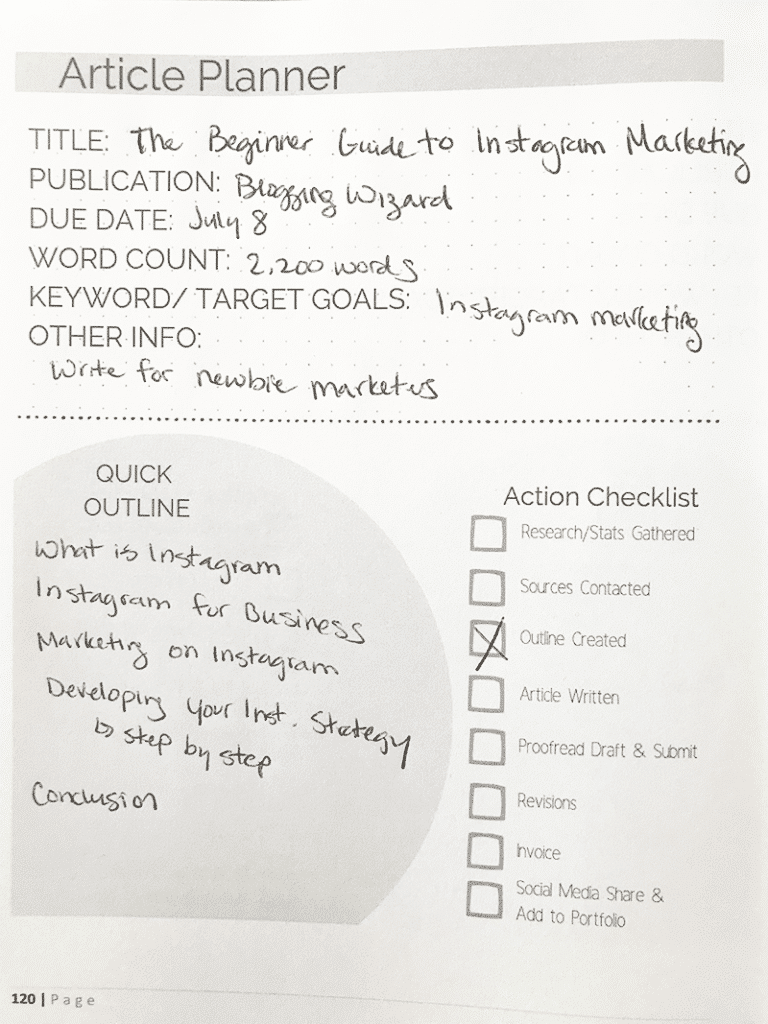
I have Google Docs of swipe files but I also have them for style guides and editorial preferences if need be.
I create a Google Sheet with invoicing instructions, formatting requirements, submission processes and all of those small editorial quirks that somehow never make it into the official onboarding documents…for EACH client.
- Did they want files named a certain way?
- Are images included or handled by their internal team?
- Do they want links embedded naturally in the copy or collected at the end of the article?
All of it gets written down.
When a new assignment comes in, I can spend a few minutes reviewing those notes before I even open a blank document, which saves me from making avoidable mistakes and helps me slip back into that client’s world much faster.
Without this system, I honestly think I’d spend half my day trying to remember whether Client A allows AI-assisted research while Client B prohibits it entirely, whether Publication C wants every statistic linked back to an original source, or whether Editor D prefers headline suggestions included in the document itself rather than in the submission email.
The longer I’ve freelanced, the more I’ve realized that it’s a skill to keep all your client’s content preferences in order.
They help clients feel like they’re working with someone reliable and easy to work with.
Most importantly, they free up mental space for the part of the job that actually matters: writing great content.
The more clients, publications and editors you work with, the more valuable these systems become.
Freelance Writing Isn’t Just Writing Anymore
And that’s okay!
Every year there are new project management systems, invoicing apps and content writing tools to learn….and that’s okay!
As a freelance writer, we have to learn to adapt and learn new things every year. This will help us grow as a freelancer and over time your processes and systems will work for you.
So be proud that you landed your first client and then the next and the next.
Be prepared for different editorial guidelines and how to invoice your clients.
And, as always, have fun with it!


Leave a Reply