
As a new freelance writer, I bet you’ve been confused with all the new and shiny freelance writing advice you’ve come across.
I mean, I’ve been at it for a while and even I’m confused by it all.
One person tells you AI has replaced writers.

Another says you need years of experience before anyone will hire you.
Someone else insists you need an English degree, or a massive portfolio, or a journalism background before you can even think about charging for your writing.
Uh…nuh-uh.
After 12 years of freelance writing, I’ve learned that a lot of the loudest advice about freelance writing comes from people who haven’t actually built the type of freelance business you’re trying to build.
And that’s where so many new writers get stuck…like I did early on.
They’re failing because they’re believing myths that stop them from taking action.
Let’s talk about a few of the biggest ones I still see floating around in 2026.
These are the things you absolutely DON’T need to be a successful freelance writer.
Myth #1: You Need an English Degree to Become a Freelance Writer
Every year someone emails me and asks if they should go back to school before becoming a freelance writer. My answer: No, zilch, nada. There’s no need to.
I’ve worked with hundreds of clients over the years. SaaS companies and marketing agencies. I also have worked with many software brands. eCommerce businesses, startups and editors. And you know what?
Not once has someone asked to see my degree. While I do have a BA in Psychology from the University of British Columbia, in no way, did that degree help me gain a freelance writing job.
Instead, these companies wanted to know how I could solve their content problem. They wanted to see if I could write in their brand voice or interview subject matter experts.
Those are the questions clients care about.
The reality is that freelance writing is one of the few careers where your work speaks far louder than your credentials.
So that means your portfolio matters because it will speak for you.
And don’t forget your communication and professionalism when negating with clients.
A degree might help you become a stronger writer, but it isn’t what gets clients saying yes.
So, don’t stress about having to go to college or get another degree. Those are things you don’t need.
Myth #2: You Can’t Make a Full-Time Living Freelance Writing
I understand why people believe this. There are scary headlines everywhere.
Layoffs. AI replacing jobs. Budget cuts. Marketing teams getting smaller.
If you spend enough time scrolling LinkedIn or YouTube, it’s easy to convince yourself that freelance writing simply isn’t a viable career anymore.
And to be fair, the market has changed.
Several studies have shown that freelance writing jobs declined after generative AI became mainstream. Research from Harvard Business School, Imperial College London, and the German Institute for Economic Research found that demand for some freelance writing and copywriting work dropped as companies experimented with AI tools.
On Upwork, AI-related projects have exploded over the last couple of years while some traditional writing categories have become more competitive.
Those numbers are real but they don’t tell the whole story.
What they tell me is that the market has shifted—not disappeared.
I’ve watched freelance writing evolve several times. Google updates changed SEO and then content marketing changed how businesses attracted customers. Social media changed how brands communicated. And now AI is changing how companies create content.
But through every one of those shifts, one thing has remained true.
Companies still need experienced writers who understand their customers and can create content that ultimately helps generate revenue.
They’re still publishing blog posts, sending email newsletters or launching products. They’re still investing in thought leadership, case studies, customer stories, landing pages, comparison pages, and educational content because that’s how modern businesses grow.
That work doesn’t simply disappear because AI exists.
Now, I want to be transparent about something. I’m not a full-time freelance writer.
Freelance writing became the foundation of my business, but over the years it gave me the opportunity to build other income streams like blogging, digital products, YouTube, and my newsletter.
My business looks very different today than it did when I landed my first client, and that’s exactly what I wanted it to do.
But I also know many writers who are making a full-time living writing for clients.
I’ve also watched hundreds of writers inside my courses and community land their first clients, replace part-time incomes, replace full-time salaries, and build businesses they never imagined were possible. Some earned their first $1,000 surprisingly quickly.
Others took six months or even a year because they were balancing freelancing with a full-time job, raising young children, or learning an entirely new skill.
Everyone’s timeline looks different.
The point is that making a living from freelance writing isn’t some mythical achievement reserved for a lucky few. It can happen to you just like how the many writers had too.
Myth #3: AI Killed Freelance Writing
This is probably the biggest freelance writing myth I’m hearing in 2026.
If you spend any amount of time on social media, it’s easy to believe that AI has completely replaced freelance writers. Every week there’s another headline predicting the end of writing careers or another post declaring that businesses no longer need human writers.
Has AI changed freelance writing?
Absolutely.
It has changed SEO, content marketing, how people search for information and how businesses think about creating content.
It has also forced writers to become better at proving the value they bring beyond simply putting words on a page.
But change doesn’t automatically mean opportunity disappears. More often than not, it means the skills companies are willing to pay for evolve.
When I first started freelance writing, many businesses were primarily looking for SEO blog posts. If you could write a well-optimized article around a target keyword, you could build an entire freelance business around that service.
Today, the conversations I’m seeing are very different.
Companies are looking for writers who can interview founders and subject matter experts, turn complex ideas into content their audience actually understands, create original research, build thought leadership, and develop content strategies that support the entire customer journey.
They’re asking questions like:
- Can you create content that AI search engines trust enough to cite?
- Can you write comparison pages that help buyers make purchasing decisions?
- Can you explain our software in a way that sounds human instead of technical?
- Can you repurpose one interview into blogs, newsletters, LinkedIn posts, and customer stories?
Those aren’t jobs AI replaced.
If anything, they’re the kinds of projects AI has made even more valuable.
The companies investing in content today aren’t looking for someone who can generate 1,500 words in five minutes. They can already do that themselves. What they’re looking for is someone who can think strategically, ask better questions, uncover insights, write with empathy, and create content that reflects their brand voice and business goals.
That’s why I don’t believe freelance writers are competing against AI.
Myth #4: You Need a Huge Portfolio Before Pitching
This one keeps talented writers waiting far longer than necessary. They think they need twenty published articles and ten client testimonials or a fancy website with a big LinkedIn following.
They do all this BEFORE they even pitch!
Repeat after me: you don’t need a huge portfolio to start pitching. I know many course students who, after buying Writeto1k, they immediately went to the pitching module and started pitching.
And guess what? They landed clients right away.
Clients do want proof that you can write, but they don’t need globs of examples.
One really strong sample written for the type of client you want is often more valuable than twenty random articles about unrelated topics.
My first portfolio wasn’t perfect or my website and pitches.
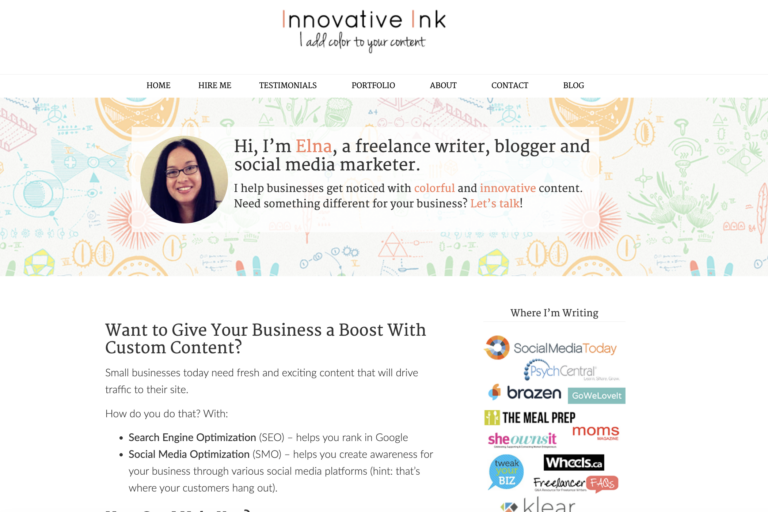
If I had waited until everything looked polished, I’d probably still be waiting.
So, take it from me, don’t wait! Start pitching BEFORE you start your website or before you have the perfect pitch.
Just have three writing samples and a LinkedIn profile and you’re good to go!
Myth #5: Good Writers Don’t Need to Market Themselves
I wish this one were true. It would certainly make life easier.
But freelance writing is still a business and your business still needs visibility.
When I actually made it a point to be consistent on LinkedIn I was able to get the attention of a well known SaaS brand.
They found my LinkedIn profile and clicked over to my portfolio and used my contact form to email me.
All because I was marketing myself by posting every day on LinkedIn, updating my profile and engaging with posts and commenters.
Marketing yourself isn’t bragging. It’s simply making it easy for the right people to find you.
Other ways to market your business might be with guest posting.
This is when a site is open to contributors and you write a guest post for them. This could be free or paid.
Another form is guest podcasting. This is when you reach out to a podcast for an interview. You might have a crazy story to share as a freelance writer or a perspective that is unique.
Finally you can use another social media platform to market your services.
Many writers use Instagram and TikTok.
Try one or a few of these methods to market your business.
What Actually Matters with AI Still Around
The freelance writing industry looks different than it did five years ago mostly because AI disrupted the industry.
But that doesn’t mean writers should give up. No. They should adapt and grow with all the changes.
The writers building sustainable businesses today are paying attention to where companies are investing their marketing budgets instead of wishing things would go back to the way they were.
That means learning about AI search or understanding content marketing.
It’s a good idea to follow industry trends and learn how SaaS companies, eCommerce brands, and digital businesses actually use content to grow.
When your skills evolve alongside the market, you’re far less likely to feel like the industry is leaving you behind.
Be Careful Who You Listen To
The internet has made it easier than ever to find advice but it has also made it easier to find bad advice.
Just because someone has a large audience doesn’t mean they’re building the kind of freelance business you want. And just because something worked ten years ago doesn’t mean it’s still the best strategy today.
Whenever I hear someone make a sweeping statement like “freelance writing is dead” or “you can’t make money writing anymore,” I always ask myself one question.
Are they talking about today’s market… or the one they remember?
Because from where I’m sitting, companies still need skilled writers.
They’re just looking for different skills than they were a few years ago.
The writers who stay curious, keep learning, and adapt to those changes are the ones who continue building careers that last.
And if you’re willing to do that, freelance writing is still one of the most flexible, rewarding businesses you can build in years to come.
Over to You
What myths did you believe? Tell me in the comments below. I’d love to hear your take on things.


Leave a Reply